http://petitions.moveon.org/sign/sen-ted-cruz-dont-shut?source=c.em.mt&r_by=8638452
Category: National
By James Thompson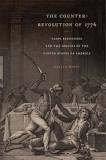
Dr. Gerald Horne, the Moores Professor of History & African-American studies at the University of Houston, has made a major contribution to the field of African-American history by publishing his book, The Counter-Revolution of 1776: Slave Resistance and the Origins of the United States of America.
This book elucidates the rebellious tendencies among Africans in the colonies leading up to the 1776 revolution. He shares a wealth of knowledge which clarifies our understanding of the social upheaval and the events which led up to the 1776 revolution.
This book stands in stark contrast to the typical “whitewashed” accounts of the 1776 revolution written by US historians. Most US students graduate from high school having been immersed in these “bleached” accounts thinking that the 1776 revolution consisted of a white man scurrying through the streets of Boston shrieking “The British are coming! The British are coming!”
Few US historians, with the exception of Herbert Aptheker and W.E.B. DuBois, have anything at all to say about Africans in North America. Professor Horne shines a light on this important but often ignored part of American history.
Karl Marx was one of the first to recognize the complexities and contradictions in the social system of the United States when he wrote: “In the United States of North America, every independent movement of the workers was paralyzed so long as slavery disfigured a part of the Republic. Labour cannot emancipate itself in the white skin where in the black it is branded. (Marx, Karl and Engels, Frederick, Collected Works, Vol. I, Ch. 10, Section 7, pg. 329).
Professor Horne’s book is timely
Dr. Horne’s book is timely in that it appears at the same time Treyvon Martin was murdered for wearing a hoodie, Michael Brown was shot dead by an Anglo police officer for walking in the street and Eric Garner was choked to death by an Anglo police officer. The book also appeared just about the time popular movies hit the screens to include Django and 12 Years a Slave.
Of course, all these events are occurring in the midst of the vilest, right wing bashing of the first African-American president of the United States. Reactionary racism has dominated the mass media in the United States for the past six years and much of the progressive left has responded by retreat into isolation. Perhaps Dr. Horne’s book will be a clarion call to action for people of conscience who oppose the repulsive, poisonous vitriol spewed out by the hysterical, red faced white fascists. Some analysts say that right-wingers constitute about 1/3 of the electorate of the USA.
The struggle between pro-slavery and anti-slavery forces
Professor Horne shines light on the intrigue which accompanied the development of the new Republic. He discusses the alliances that formed between the Africans, the British and the indigenous population in North America. He notes that the threat that these alliances posed to the slave-holding bourgeois class helped propel the colonists to revolution. Much more research is needed, but Professor Horne’s account of these developments may suggest that these anti-slavery tendencies among the Africans, British, and indigenous people as well as the anti-slavery tendencies among certain leaders of the colonists, and certain elements of the Spanish, French and Mexican governments may have been crucial to the development of the progressive movement in the United States. It is important to remember that Thomas Jefferson and Benjamin Franklin were opposed to slavery and were active in the struggle against slavery. Britain abolished the slave trade in 1807, and the United States followed close behind by abolishing the slave trade in 1808. Britain abolished slavery in 1833 and the United States followed in 1865, about 32 years later.
Dr. Herbert Aptheker wrote about the struggle between pro-slavery and anti-slavery elements in the development of the American Republic in a chapter on the Declaration of Independence: “The second major congressional revision of Jefferson’s document resulted in the excision of a long passage-more than 150 words-dealing with slavery and the slave trade. This passage appeared as the final, climactic, item in the listing of abominations brought upon the colonies by George III, justifying resistance to his forcible efforts to retain them. In this passage Jefferson excoriated the King for vetoing repeated colonial efforts to curtail or to ban the African slave trade and denounced not only the trade but the system of production which it served. Due to the heated objections of the delegates from slaveholding Georgia and South Carolina and the somewhat less intense objections from several delegates from Massachusetts, Connecticut, and Rhode Island, where slave trading had been an important business, this entire passage was excised. In the Declaration not a word is found of the slave trade, and slavery appears obliquely and very briefly in an attack on the King for having “excited domestic insurrections amongst us.” (Aptheker, Herbert, The American Revolution 1763-1783, International Publishers, New York, 1960, p. 101). Prof. Aptheker also wrote: “Especially striking is the fact that while the Declaration spoke of equality, liberty and the pursuit of happiness, 600,000 American slaves-slaves for life, who transmitted their status to all offspring, through the maternal line-were held to labor under the lash. It is indeed one of the most painful and yet most revealing facts in American history that the author of the Declaration of Independence was himself a slave owner (Ibid., p. 108).
Definition of revolution
It is important to note that both progressive and reactionary tendencies in the colonies interacted in such a way that it culminated in an anti-imperialist revolution. Lenin defined revolution as follows: “The passing of state power from one class to another is the first, the principal, the basic sign of a revolution, both in the strictly scientific and in the practical political meaning of that term.” (Lenin, V.I., Letters on Tactics (1918) Lenin Collected Works, Progress Publishers, 1964, Moscow, Volume 24, pp. 42-54). In the case of the American Revolution, state power passed from the feudalistic, aristocratic, bourgeois classes in Britain to the non-feudalistic, non-aristocratic, bourgeois class in the 13 colonies.
Definition of counterrevolution
Professor Horne argues that there were elements among the American revolutionaries who used the revolution opportunistically to postpone the abolition of slavery in North America. Some might argue that these reactionaries were actually counter-revolutionaries.
Counterrevolution may be defined as the passing of state power from an advanced class to a less advanced class, e.g. from the working class to the bourgeoisie. The 1917 Russian revolution was a passing of state power from the bourgeoisie to the proletariat. The end of the Soviet Union was a counter-revolution because state power passed from the working class to the bourgeoisie.
It could also be argued that the pro-slavery tendencies that Dr. Horne writes about may have been an important part of the development of the right wing and fascist tendencies in the United States in more recent years.
Revolution or counterrevolution
Others may argue that since the British aristocracy and bourgeoisie were overthrown in the colonies and state power passed to the bourgeois class in the colonies, the American Revolution was a revolution indeed according to Lenin’s definition i.e. the passing of state power.
In any case, the American Revolution, as any bourgeois revolution must be, was clearly contradictory and complex. These complexities and contradictions are still in effect to this day.
The liberation of slaves was essentially a humanitarian and democratic question since the passing of state power to the slaves is not essential to the concept of the liberation of slaves. This passing of state power is essential to the concept of revolution or counter-revolution. For example, in the middle of the 19th century in the USA there was a liberation of slaves under the regime of Abraham Lincoln, but there was no passing of state power from one class to another. There was merely a consolidation of state power in the bourgeoisie in the Northern states. Similar to the case of the slaves, in the Civil War there was no passing of state power to women, indigenous people and other sectors of the working class. Therefore these were not questions of revolution or counter-revolution, they were questions of liberty, humanitarianism and democracy.
The struggle between pro-slavery and anti-slavery elements laid the groundwork for the struggle between progressive and reactionary forces today.
Dr. Horne points out correctly that David Duke, a racist fascist, received a great deal of support in his campaign to be governor of Louisiana. He did win a majority of the Anglo vote in this race. However, it is important to remember that Duke did not win the election. Even in reactionary Louisiana, a coalition of moderate forces prevailed and repelled this repugnant Nazi.
In recent years we have seen a passing of state power from one sector of the bourgeois class, i.e. the liberal sector, to another sector of the bourgeoisie, i.e. the reactionary sector. Therefore, this passing of state power from one sector to another sector of the same class is not a revolution according to Lenin’s definition. Recently, the reactionary sector has succeeded in rolling back many reforms brought about during the Roosevelt years. Many civil liberties and social programs have been severely limited or eliminated altogether. Violent racist action has increased and many innocent workers and their family members have been slaughtered.
Some on the left confuse the concept of a proletarian revolution with the concept of revolution. It is important to remember that according to Lenin’s definition of revolution, the passing of state power can be from any class to any other class. Once again, the American revolution resulted in a passing of state power from the British bourgeoisie to the American bourgeoisie over the British colonies in North America. Therefore, the exclusion of African slaves, European women, European and Asian indentured servants, the indigenous and Latino populations of North America and other oppressed peoples does not preclude the regime change during the late 18th century from being a revolution.
Conclusion
Thanks to Professor Horne’s work, we now have a better understanding of the various components of the dialectical process in the struggle between proslavery and anti-slavery forces leading up to the foundation of the American Republic. We also can see that the struggle continues for a more perfect union between the reactionary and progressive forces today. Horne’s book enlightens us about the history of the struggle for African-American equality in the United States, the struggle against slavery, the struggle against racism as well as the roles these various struggles played in the development of the country.
Hopefully, many people will read this important book and it will raise their consciousness about the history of the United States of America. This could mark a turning point and further the development of a mass movement against racism, sexism and fascism. People will reject fascism and its negative ideology when they understand that it will lead to war and destruction (perhaps of the whole world). Horne’s book can contribute to this future positive turn of events.
From the Marxism-Leninism Today Editors
Friday, August 22, 2014
Western Pennsylvania has a rich history of class struggle. The region has witnessed, for example, the Great Railroad Strike of 1877, the Homestead Steel Strike of 1892, the growth of the CIO in the 1930s and 1940s, and the fierce attacks on organized labor and the Left by McCarthyism in the 1950s.
Meeting in Pittsburgh on Saturday August 16, 2014, readers and supporters of the Marxism-Leninism Today (MLT) website — www.mltoday.com — many of them former Communist Party leaders and activists, met to form a new Communist organization.
Those attending came from Pennsylvania, New York, Ohio, Kentucky, Massachusetts, and New Jersey. Greetings were received from those in Texas and Indiana who could not attend. Ten former members of the National Committee of the CPUSA either attended the conference or helped to plan it. More than half of those attending were union activists or union officers.
The conference heard and discussed presentations by convenors from the MLT Collective who presented three resolutions which, after discussion, were amended and formally adopted unanimously.
The key conference decision was adoption of a resolution to create a pre-party formation, tentatively called the Network of Communist Clubs (NCC). It will be led by Temporary Coordinating Committee (TCC), composed of the MLT Collective and two additional members who were added at the meeting to ensure a more balanced leading committee.
TCC’s main task will be to undertake necessary actions to create conditions for the birth of a full-fledged Communist Party operating on Leninist principles. The TCC will guide and nurture a network of Communist clubs. To some extent, a network of such clubs already exists.
Two of the opening presentations focused on the ten-year period since the founding of the MLT website, what led to its founding, and how it has tried to uphold the traditions of struggle of the CPUSA. Also included was a more detailed report on the growth and development of the MLT website, which since 2004, has enjoyed a five-fold growth in readership, two-thirds of it in the US. It has a lengthening list of regular writers, and growing international contacts. Since 2010 it has made several attempts to take the next step, from a political web site to organization.
A labor historian offered the long-term view, describing the untidy process by which the first CP came into being in 1918-21. He compared the favorable and unfavorable factors influencing the birth of a new organization, then and now. He reviewed the party’s recurrent battles against opportunism, a political illness always resurgent when the fortunes of US imperialism were on the upswing. He enumerated Lenin’s key ideas on what kind of vanguard political party the working class movement needs. With all our limitations and shortcomings, he concluded, it is our responsibility to try to rebuild.
A four-member panel of the Pittsburgh Club reported how the club came together in 2010. They outlined the essence of what an ideal Communist club ought to be and gave a report on the Pittsburgh club’s attempts to turn the ideal into reality, with substantial success.
The timing of the Pittsburgh meeting was influenced by the 30th CPUSA Convention in June 2014, which formally wrote into the Party Constitution new language taking the Party even further away from Lenin’s ideas about revolutionary organization. About one year ago, MLT editors announced their aim of refounding a Communist party. In the last year they have visited activists in almost all parts of the country to test sentiment.
Speakers from the floor spoke of the worsening objective conditions in the country, against a backdrop of upheaval against racial injustice in Ferguson, Missouri and the US-led aggressions, old and new, under way in dozens of countries. Not a single people’s movement has remained unaffected by the absence of a CP in the United States. The US labor movement despite some signs of struggle, remains in decline and retreat, and mired in class collaborationism.
Participants at the meeting agreed that the stress will be on a bottom-up approach to the creation of functioning clubs involved in mass struggle. The TCC was charged in the coming period with involving people in mass work in such areas of political work as labor, peace & solidarity, equality, and independent political action. Many in attendance are already involved in such work.
The TCC will create and supervise a working committee to write an expanded statement of principles, looking toward a full Party program. It will look at ways to alter the nature of the ML Today web site to begin to serve NCC organizational needs. It will recruit volunteers and strive to put the organization on a more stable and sustainable basis. It will work toward obtaining a physical location and address as soon as possible.
The Pittsburgh meeting agreed to hold a follow-up meeting in three months at a site still to be determined.
Those interested in contacting the TCC for more information can reach it at <<tcc.ncc2014@gmail.com >>.
Houston – On Saturday, July 12, 2014, about 25 activists braved the Houston summer heat and a thunderstorm in front of the Galleria shopping center to express their opposition to U.S. military intervention in the Middle East. It was a peaceful, spirited demonstration called by the Progressive Workers Organizing Committee. A number of organizations participated including LCLAA, Houston Peace and Justice Center, Houston Communist Party, CPUSA including a number of labor activists.
The Chicago Chapter of Jobs with Justice has endorsed HR 676, national
single payer legislation sponsored by Congressman John Conyers of
Michigan. HR 676 is also called “Expanded and Improved Medicare for All.â€
Susan Hurley, Executive Director of Chicago Jobs with Justice, commented
on the resolution, “Single payer health care has to be our ultimate goal
in the United States. It is the only humane and civilized choice, as well
as being the best choice for health outcomes and cost.â€
“The longer the delay, the deeper our shame in the eyes of the world and
future generations,” Hurley stated.
The resolution notes that an estimated 31 million Americans will remain
uninsured in 2023 and that underinsurance is growing as many patients are
forced into insurance plans with high-deductibles
(> $1,000) and narrow networks of providers.
Chicago Jobs with Justice, a broad coalition of scores of unions and other
organizations including the Chicago Federation of Labor, is dedicated to
promoting workers’ rights and social and economic justice.
HR 676 would institute a single payer health care system by expanding a
greatly improved Medicare to everyone residing in the U. S. Patients will
choose their own physicians and hospitals.
HR 676 would cover every person for all necessary medical care including
prescription drugs, hospital, surgical, outpatient services, primary and
preventive care, emergency services, dental (including oral surgery,
periodontics, endodontics), mental health, home health, physical therapy,
rehabilitation (including for substance abuse), vision care and
correction, hearing services including hearing aids, chiropractic, durable
medical equipment, palliative care, podiatric care, and long term care.
HR 676 ends deductibles and co-payments. HR 676 would save hundreds of
billions annually by eliminating the high overhead and profits of the
private health insurance industry and HMOs.
In the current Congress, HR 676 has 58 co-sponsors in addition to
Congressman Conyers.
HR 676 has been endorsed by 614 union organizations including 147 Central
Labor Councils/Area Labor Federations and 44 state AFL-CIO’s (KY, PA, CT,
OH, DE, ND, WA, SC, WY, VT, FL, WI, WV, SD, NC, MO, MN, ME, AR, MD-DC, TX,
IA, AZ, TN, OR, GA, OK, KS, CO, IN, AL, CA, AK, MI, MT, NE, NJ, NY, NV,
MA, RI, NH, ID & NM).
For further information, a list of union endorsers, or a sample
endorsement resolution, contact:
Kay Tillow
All Unions Committee for Single Payer Health Care–HR 676
c/o Nurses Professional Organization (NPO)
1169 Eastern Parkway, Suite 2218
Louisville, KY 40217
(502) 636 1551
Email: nursenpo@aol.com
http://unionsforsinglepayer.org
6/23/14
http://www.informationclearinghouse.info/article38857.htm
By Dennis J. Kucinich
June 18, 2014 “ICH” – “HP” – As Iraq descends into chaos again, more than a decade after “Mission Accomplished,” media commentators and politicians have mostly agreed upon calling the war a “mistake.” But the “mistake” rhetoric is the language of denial, not contrition: it minimizes the Iraq War’s disastrous consequences, removes blame, and deprives Americans of any chance to learn from our generation’s foreign policy disaster. The Iraq War was not a “mistake” — it resulted from calculated deception. The painful, unvarnished fact is that we were lied to. Now is the time to have the willingness to say that.
In fact, the truth about Iraq was widely available, but it was ignored. There were no WMD. Saddam Hussein had nothing to do with 9/11. The war wasn’t about liberating the Iraqi people. I said this in Congress in 2002. Millions of people who marched in America in protest of the war knew the truth, but were maligned by members of both parties for opposing the president in a time of war — and even leveled with the spurious charge of “not supporting the troops.”
I’ve written and spoken widely about this topic, so today I offer two ways we can begin to address our role:
1) President Obama must tell us the truth about Iraq and the false scenario that caused us to go to war.
When Obama took office in 2008, he announced that his administration would not investigate or prosecute the architects of the Iraq War. Essentially, he suspended public debate about the war. That may have felt good in the short term for those who wanted to move on, but when you’re talking about a war initiated through lies, bygones can’t be bygones.
The unwillingness to confront the truth about the Iraq War has induced a form of amnesia which is hazardous to our nation’s health. Willful forgetting doesn’t heal, it opens the door to more lying. As today’s debate ensues about new potential military “solutions” to stem violence in Iraq, let’s remember how and why we intervened in Iraq in 2003.
2) Journalists and media commentators should stop giving inordinate air and print time to people who were either utterly wrong in their support of the war or willful in their calculations to make war.
By and large, our Fourth Estate accepted uncritically the imperative for war described by top administration officials and congressional leaders. The media fanned the flames of war by not giving adequate coverage to the arguments against military intervention.
President Obama didn’t start the Iraq War, but he has the opportunity now to tell the truth. That we were wrong to go in. That the cause of war was unjust. That more problems were created by military intervention than solved. That the present violence and chaos in Iraq derives from the decision which took America to war in 2003. More than a decade later, it should not take courage to point out the Iraq war was based on lies.
Follow Dennis on Facebook: www.facebook.com/denniskucinich
Video: http://www.youtube.com/watch?v=_M4sP6FieEk&feature=youtu.be
Andy Coates, MD, a former union activist and elected member of the
statewide executive board of his union, the 58,000 member New York State
Public Employees Federation, AFL-CIO, recently spoke in Chicago where his
presentation appeared on Labor Beat, a Chicago area Cable TV program.
Dr. Coates presents a clear overview of the national health care crisis,
the inadequacies of the ACA, and the argument for an ‘everybody in, nobody
out’ Single Payer health program. He gives insight into the basics in
this debate, backed up by selected PowerPoint graphics prepared by
Physicians for a National Health Program (PNHP) and the Illinois
Single-Payer Coalition. Dr. Coates is President of PNHP; Clinical
Assistant Professor of Medicine and Assistant Professor of Psychiatry,
Albany Medical College; Chief of Hospital Medicine, Samaritan Hospital,
Troy, NY; and Medical Director, Albany County Nursing Home.
Dr. Coates concludes that insurers are selling an “unaffordable, defective
product” as he compares the U.S. health care system to other
industrialized countries. We are a nation of increasingly un- and
under-insured, facing staggering household debt from medical bills, and in
particular exposing under-insured children, women, minorities and retirees
to increasing fatality rates and poor health, in order to satisfy a market
solution to health care.
He points to the 2013 AFL-CIO resolution’s “commitment to pursue health
care for all ultimately through a single-payer system” as an important
step forward.
Dr. Coates calls upon the union movement: “I think that for the trade
union movement that if we speak out for what it means for all working
people we’re talking about liberating the whole country here with basic
economic rights, the right to necessary care. Then we find a way forward
for the whole trade union movement. The unions they have the expertise,
they know how to lead us forward, they know exactly how to organize
people, how to fight…and it’s going to take a fight. There’s no
shortcut.”
If your union has not yet endorsed HR 676, please take that first step.
There is a sample resolution here:
http://unionsforsinglepayer.org/tools/sample_resolution
Distributed by:
All Unions Committee for Single Payer Health Care–HR 676
c/o Nurses Professional Organization (NPO)
1169 Eastern Parkway, Suite 2218
Louisville, KY 40217
(502) 636 1551
Email: nursenpo@aol.com
http://unionsforsinglepayer.org
6/16/2014