By Arther Shaw via VHeadline
There is no rational reason for these “fears of confrontation” if the cattle ranchers and landholders mind their own business and if the cattle ranchers and landholders stop sending death squads and mercenaries to murder peasants and to evict peasants from land that the peasants or the State own. On the other hand, if the cattle ranchers and landholders continue to send their death squads and mercenaries to murder peasants, the ranchers and landholders should have “fears of confrontation.”
These cattle ranchers and landholders don’t feel any “fears of confrontation” from the US imperialist military build-up in Colombia, next door to Venezuela. These cattle ranchers and landholders seem discriminatory about what developments they allow to excite their “fears of confrontation.”
These big cattlemen and wealthy landowners are key elements of the bourgeois-led opposition in Venezuela. The capitalist press will go to any lengths and tell any lie to disassociate the rural bourgeoisie from their death squads and mercenaries who mercilessly and murderously prey on peasants.
“Faced with the onslaught against peasants through an escalation of aggressions, sabotage and hired killings by the most reactionary forces of our society, the duty of the state … is to protect the poor farmers,” Hugo Chavez wrote in his newspaper column, February 21.
Chavez is right. It is the duty of the State to protect poor farmers because the State in Venezuela is a democracy which exercises power in accordance with the rule of law. These “aggressions, sabotage and hired killings by the most reactionary forces of our society” are not the rule of law, but rather these actions are an attempt by the opposition to rule illegally through the use of violence. These actions are an attempt by the opposition to overthrow the rule of law. The law must suppress violence or the violence will suppress the law. What is being seen, here, is not only opposition-sponsored violence against supporters of the revolution and others, but also an opposition-sponsored “escalation” of violence.
A law … against violence that is not effectively enforced … ceases to be law that rules.
The rural proletariat of Venezuela possesses the right stuff to bring an end to the escalating opposition’s violence in the countryside and to deal with US imperialist savages and mercenaries should they cross the border from Colombia.
The AP wrote “Chavez … has repeatedly warned that the US military could invade Venezuela to seize control of its immense oil reserves. US officials deny that any such plan exists.” The denials of US imperialists are worthless because US imperialist are confirmed and habitual liars. They lied about their non-involvement in the 2-day overthrow of Venezuelan democracy in 2002. They lied about the reasons for their 7-year aggression, occupation, and genocide against the Iraqi people beginning 2003. They lied about their involvement and the reasons for their involvement in the 2-year overthrow of Haitian democracy beginning in 2004. They lied about their involvement in the ongoing overthrow of Honduran democracy in 2009. If “US officials deny that any such plan exists,” that only proves irrefutably that such plans exist and are in some stage of implementation. The bourgeois media report the denials of US officials as if the denials were plausible because the bourgeois media are as worthless and as mendacious as the imperialist regime in Washington.
“The [Venezuelan] government claims that more than 300 peasants have been killed — purportedly by mercenaries for wealthy landholders — since authorities launched a sweeping land reform initiative in 2001,” the AP wrote. The AP and the rest of the bourgeois media are trying to be slick and sly when they talk about mere “claims” and about what “purportedly” happened. The AP thereby denies the occurrence of the massacre of peasants and the complicity of the opposition for the massacres.
Do you know why the AP denies the occurrence of the massacre of 300 peasants since 2001? The AP helped to cover-up the massacres.
Do you know why the AP denies the complicity of the opposition for the massacres? The AP is part of the opposition.
Since 2001, every time the toe of a Venezuelan bourgeois was stepped on, the AP wrote a lot of stories about “repression.” But, when a peasant had his head blown off, the AP said nothing over a nine year period, even though the humanity of the poorest peasant is ten times more worthy than that of the richest bourgeois … the latter a corrupt land thief.
One of the favorite propaganda lines of the bourgeois media, especially the AP, is “The security forces that already exist should provide security for all of those in the countryside.” This is precisely what the security forces are doing. The term “all of those in the countryside” includes the peasants, the vast majority of the people in the countryside.
The bourgeois media argues that the peasant militia does not “already exist.”
So, the bourgeois media says the peasant militia should not provide security! If what already exists has proven unable to provide security for “all those in the countryside,” why should the security forces be limited to what already exists?
When the bourgeois media and opposition say they want to limit the security forces in the countryside to those that already exist and that are unable, so far, to provide security, this shows that bourgeois media and the opposition don’t want to provide security for “all those in the countryside.”
The bourgeoisie doesn’t want the peasants to be secure. Well, tough luck … the peasants want to be secure.
 By Ron Gray via Political Affairs
I am inclined to agree with much of the recent article “Save the party.†However, concerning the internet, while not a panacea it can be a very useful tool. I am an internet recruit. Since affiliating myself with the party, I and four other web heads have started a club (pending party acceptance). I have written an article about the news media’s ignoring important statements made by the new CEO of Bank of America which was published, in People’s World. Another member is working on an article and a membership campaign after a furniture factory closing in North Carolina. Our club is working on a campaign to change people’s perception of the party here in the Carolinas. Once quite strong in the Carolinas, we have lost our advantage due to inactivity and the passing of former members. We must embrace this new technology, using it to our best advantage: to drive membership, fund raising and keep comrades informed and motivated. I agree with you that we can’t accept just anyone that sends in an application without some vetting process. There has to be some balance. There might be some people that because of illness or handicap can only participate via internet. But, they may make significant contributions. The ultimate goal must be finding and nurturing active, contributing members. To make the party strong we must have a large tent and allow for exceptions and diversity even in our membership policy. As Communists, Diversity and flexibility have been our strengths and bureaucracy and rigid policy our weakness.
I agree we must differentiate ourselves from the democrats and more closely examine ourselves against our Marxist ideals I agree that any step in the right direction should be embraced wherever it might come from but, we are communists not democrats. Let us boldly proclaim our identity and the noble truths it stands for. If we weaken our stand we run the risk of losing those principles that make us unique. We are a uniquely American communist party but, we must remain in unity and solidarity with our comrades in other countries with a view to worldwide communism. I too wish we could run a potent candidate in every election in America. However, at our current level of popularity I fear we run candidates at the peril of gaining a reputation of being a party of impotent “also rans”. This can become an entrenched perception which is difficult to overcome. Still, at some point we must step up and fight for a leadership position but, it should be in a race where we can give a good account of ourselves and if not win, at least show strength. Let us choose our fights wisely.
Finally, one thing we must not do is allow ourselves to become divided. It’s good to have diversity of opinion and to debate it strongly and openly but when a decision has been made let us come together in solidarity and give it our full support. I believe that it is good that we can criticize our leaders, in fact it is downright healthy and an American tradition to do so. When we do, let it be constructively, offering solutions to our problems and offering no unnecessary offense to our comrades that bear the burden of leadership. The diversity of ideas within our party must not become a “war of ideas” such as exists between democrats and republicans and will be their downfall. We will win by being the party of diversity, ideas, flexibility, compassion, a balanced approach and solidarity.
 By Arthur Shaw via VHeadline
The people of Venezuela, not just Hugo Chavez, are setting up a working class state to replace a bourgeois state. The working class state will have a pristine democratic form, largely defined by the 1999 Venezuelan Constitution. Bourgeois propaganda outlets, like VenEconomy, see a working class state that is not chiefly composed of the bourgeoisie and that doesn’t chiefly exercise state power for the bourgeoisie, as “despotic,” no matter how pristine the democratic form of the working class state.
VenEconomy tries to palm-off its vile class arrogance as democracy. That is what it truly “looks” like.
* Trying to make trouble, VenEconomy wrote “Ramiro Valdes is here as the head of a Cuban technical commission that has come to cope with Venezuela’s current electricity crisis.”
Ramiro Valdes is the Cuban Minister of informatics and communications and one of six vice presidents of Cuba. The technical commission, which Valdes heads, will consider cost-efficient ways to expand the generation of electricity and to reduce the consumption of electricity in Venezuela. Cuba, with a huge force of highly-trained electrical engineers, has extensive experience on the national and international levels in what Cuba calls the “energy revolution” and Valdez has been deeply involved in the energy revolution on the national and international levels. The mass of electrical engineers of many countries largely believe in the monopoly capitalist approach to energy problems, not what revolutionaries call the “energy revolution.”
Many countries, especially in the Caribbean, have sought and accepted Cuban cooperation in their energy revolutions. Most of these countries speak highly of Cuban cooperation in the field of electrical generation and consumption. In addition to cooperation from Cuba, Venezuela has sought and accepted cooperation from Argentina, Brazil, and China on cost-efficient ways to win the energy revolution.
US imperialism is violently opposed to Cuban ideas on how poor or less developed countries can win the energy revolution. US imperialists believe that Cuban ideas about the generation and consumption of electricity adversely affect the interests of monopoly capital, especially the worldwide AES company, in the energy industry. VenEconomy, of course, grovels before US imperialists.
VenEconomy doesn’t believe Valdes is in Venezuela to help win the “energy revolution” … VenEconomy believes Valdes is in Venezuela to do something else. So, VenEconomy asks “The question, then,what is task has Ramiro Valdes been assigned to carry out in Venezuela by Fidel Castro and Hugo Chavez?” VenEconomy answers its own question when it says “Chavez revving up the repression apparatus.”
Why is he allegedly doing this?
At this point, VenEconomy goes queer on us, saying it has two contradictory reasons why the alleged “repression apparatus” is being revved up.
First, Chavez is too weak to survive unless he revs up.
Second, Chavez is so strong that he can afford to rev up…
Obviously, VenEconomy has no idea of what it is talking about.
Relying chiefly on Colombian and Venezuelan terrorists, the bourgeois-led opposition in Venezuela has resorted to violence, especially murder and assaults, as its main electoral tactic.
The opposition is trying to intimidate the Venezuelan voter, by mass murder and mass assaults, into abandoning the revolution. But the increasingly working class state in Venezuela will maintain law and order without revving up some “repression apparatus.”
Indeed, there is no “repression apparatus” to rev up under the current revolutionary government.
By Arthur Perlo via Political Affairs
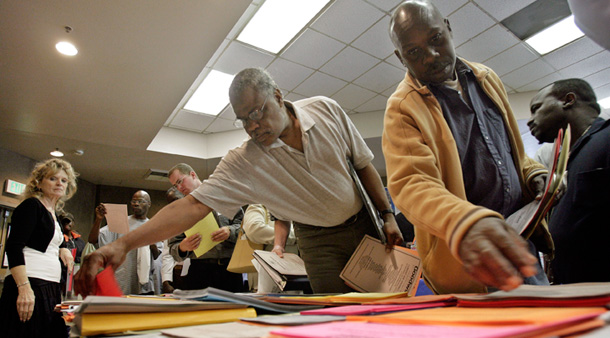
The economic crisis has brought suffering to every part of the country and every section of the working class. As in past recessions, this crisis has fallen most heavily on communities already suffering, and particularly on people of color and immigrants. This is true of every aspect of the crisis, including foreclosures and evictions and state and local government layoffs and cuts in services.
There are many attempts to divert attention by pitting sections of the working class against one another: white workers against racially and nationally oppressed, African Americans against immigrants and Latinos, young against old, men against women. Whatever the motives, these themes play into the hands of the Wall Street bankers and other corporate interests who are the primary cause of the crisis and obstacles to solutions that must come at their expense. This article, however, will focus primarily on the jobs crisis in the African American community as a critical part of the overall picture.
Even before the crisis, African Americans faced difficult, and in many ways worsening employment opportunities. This crisis has hit all workers hard, including white workers, with employment levels the lowest since the 1930s. But during the best boom years of 1988-90 and 1998-99, the percentage of African Americans employed in each age group just about reached the levels that white workers have fallen to today. Put another way, white workers today are just beginning to face conditions that African Americans faced in the best of times.
Jobs crisis by the numbers
The analysis presented here indicates that between one quarter and one third of all working-age African Americans are unemployed. Three quarters of Black teens are unemployed.
The “official” unemployment figures for December 2009, compiled by the Bureau of Labor Statistics (BLS), are 16 percent for African Americans, 13 percent for Latinos, nine percent for whites, yielding an average for all workers of 10 percent. [1] The BLS survey attempts to count everyone who is actively looking for work, regardless of whether they are collecting unemployment. The real situation is far worse. The BLS also counts the invisible unemployed – those who want a job but are not actively looking, and who want a full-time job but can only find part-time work. The BLS’ U-6 rate, which includes the invisible unemployed, is a far more realistic estimate of actual unemployment. The U-6 rate for all workers is 17.3 percent. [2] The U-6 rate can be estimated as 28.0 percent for African Americans and 22.3 percent for Latinos. [3]
For African American men of prime working age (25-54) I estimate the “real” jobless rate at 26 percent. For African American teens (16-19), “real” unemployment is 74 percent. Even for white teens it is 52 percent! [4]
Causes of the Jobs Crisis
The numbers are shocking. African American unemployment rates above 25 percent for men aged 25-54, and nearly 75 percent for teens, mean that in many communities there is almost no chance of finding a job.
Looking at long-term trends is instructive. From 1980 to 2000, an average of about 50 percent of white teenagers (men and women) were employed. [5] The number dropped during recessions, then recovered. After the 2001 recession, white teen employment dropped to about 40 percent. In the current crisis, it has fallen to 30 percent.
In the 1980s, only about 25 percent of Black male teens had jobs. The fluctuations were large – in recessions, there were big losses, and employment peaked above 30 percent in the late 1980s and again in the late 1990s. But it dropped to 20 percent in 2001, and in this crisis has fallen below 15 percent. The pattern for Black female teens followed a different pattern in the 1980s, but is similar today.
In the best years, Black teens were no more likely to be employed than white teens are at the worst time in at least 70 years. This tends to be true of other age groups as well. For men aged 25-54, the best year for African American employment about matched the worst for white workers.
There is widespread recognition that unemployment is at crisis levels in African American communities, although use of the “official” 16 percent jobless rate greatly understates the severity. But there is some confusion over causes. It is often said or implied that African Americans, and youth in particular, lack the eduction, social skills, jobs skills and/or attitude for employment. This explanation ignores the impact of the economic crisis, as well as the reality of discrimination.
Before the economic crisis, roughly 79 percent of Black men aged 25-54 held jobs. Two years later, the figure was 69 percent. Did 10 percent of Black men become uneducated or lose their job skills in a two-year period? Did one quarter of working African American teens suddenly develop a “bad attitude?” The more obvious and correct explanation is simply that the jobs are not there.
Causes of lower pay and lack of jobs: Overt Discrimination
Despite propaganda to the effect that discrimination is a thing of the past, or even that African Americans have an advantage due to “reverse discrimination,” objective studies, as well as anecdotal evidence, indicate that deliberate racial discrimination in hiring is still widespread. Studies show that employers are less likely to even interview someone if they think the applicant is Black.6 Another study concluded that young Black men in general are assumed to be criminals and denied jobs by employers.†[7]
At least since Reagan’s election in 1980, the Federal government has moved away from fighting against racial discrimination. Even before George W. Bush became President, EEOC policy was to ignore clear patterns of unintentional discrimination unless there were specific (individual) complaints. [8] Judicial decisions on affirmative action cases have actually leaned to enforcing discrimination, by making it illegal to take any steps against it.
This trend intensified during the recent Bush administration. His Supreme Court appointments both have bad records. Justice Roberts was one of a close-knit group of conservatives who were part of the Reagan administration’s efforts to dismantle civil rights and outlaw affirmative action. [9] In 2004, the staff of the US Commission on Civil Rights issued a blistering attack on the Bush administration’s record. [10] In 2005, 20 percent of the Civil Rights Division’s lawyers were forced out or quit over policies that reduced civil rights prosecutions by 40 percent.
The Obama administration is attempting to re-orient federal agencies toward supporting, rather than opposing, civil rights. But it is an uphill battle. Last year, the Supreme Court with its right-wing majority ruled against the city of New Haven’s attempt to insure that promotions in the fire department would include African Americans.
Causes of lower pay and lack of jobs: Systemic or Institutional Reasons
Regardless of the attitudes of individuals, systemic or institutional reasons are probably at least as important as overt discrimination for the vastly higher number of unemployed African American workers. These factors operate independent of the deliberate decisions of the individuals doing the hiring.
• “About half of all jobs are still found through personal contacts of some sort… economists also suggest that network effects may help to account for income inequality between races.†[11] Articles in the business press frequently cite the advantages of personal networks both for the jobs seeker and the person doing the hiring, a practice widespread in the IT industry amongst others. [12]
• Geography – jobs have moved from where African Americans live (often in central cities) to suburban and rural areas with few African Americans. The IT industry is a prime example.
• As a result of outsourcing in both corporate and government world, on-job training and promotion paths are disappearing. “’For too many of our people, entry level no longer means entry-level. It means dead end’, says Rodney Glenn [of the NYC Transport Workers Union].†[13] African Americans are particularly affected, because they have fewer personal contacts or educational opportunities to provide alternatives.
• Education: Nationally, only two-thirds of all students and one-half of African American, Latinos and Native Americans graduate high school after four years. In New York City less than 10 percent of African American students get a regents diploma (preferred for college admission). [14] Teachers with less than three years experience teach in minority schools at twice the rate they teach in white schools. [15]
• A criminal record is a legal barrier to employment in many professions, and a practical barrier in many more. [16]
• During the 1960s African Americans made gains in the quantity and quality of manufacturing jobs, then concentrated in big industrial centers. Until the early 1990s, African Americans were as likely to have manufacturing jobs as other racial and ethnic groups. [17] The steep absolute decline in manufacturing jobs since the late1990s was accompanied by a geographic shift – as auto plants closed in Detroit and Chicago, new factories, employing far fewer workers, were built in rural counties of the South where few African Americans lived. As a result of these trends, by 2007 African Americans were 15 percent less likely than other workers to have one of the remaining jobs in manufacturing.
• From 1983 to 2006, union representation declined for all groups, but most sharply for Black and Hispanic workers, least so for whites. [18] For white workers, the union members earn 28 percent more than non-union. The union advantage is 29 percent for Black workers, 50 percent for Latinos, and 34 percent for women. [19]
Stimulus and Beyond
In February, 2009, Congress passed the American Recovery and Reinvestment Act (ARRA), more widely known as “the stimulus bill” – not to be confused with the Wall Street bailout (TARP) which was passed under the Bush administration. ARRA has provided some relief from the crisis. It is now reaching its maximum effectiveness, and administration claims that up to 2 million jobs have been created or saved are credible. To what extent has ARRA helped African Americans?
ARRA provided substantial funding to help states pay for and expand Medicaid coverage. African Americans, who are more likely to have low incomes and qualify for Medicaid, probably benefited from this. African Americans also shared in any jobs that were saved or gained in nursing homes and other health care providers. And African Americans, who suffered the greatest job losses, may well have been the greatest beneficiaries of the ARRA’s increase and extension of unemployment benefits and COBRA.
ARRA aid to local governments, including school districts, was distributed in part on the basis of need. Cities with large African American populations generally have high poverty, and qualified for significant assistance. This helped reduce layoffs in school systems and some other government departments, preserving jobs and education quality in schools where a large proportion of students and a significant number of teachers are African American.
On the other hand, according to a report by United for a Fair Economy, “Most of the job-creation projects in the American Recovery and Reinvestment Act (ARRA) and other federal initiatives are investments in infrastructure and transportation, “green†building retrofits, and pass-through funds that help states maintain schools and other important programs. All are worthy, but there is no evidence that the jobs these initiatives create are going to the communities most in need. In some cases, the opposite is true.” [20]
What’s Ahead?
The most optimistic forecasts call for a slow economic recovery, with unemployment declining slowly, but remaining high for many years. It is also possible – even likely – that there are new economic shocks ahead, which can cause even more job losses. The Administration and Congress are proposing measures that will, preserve some of the benefits of the existing stimulus. These are urgently needed. For example, beginning later in February millions of unemployed workers will lose their unemployment insurance and health coverage if those measures are not extended. State and local governments will budget for even bigger layoffs and service cuts later this year if help is not forthcoming. Even if passed over intransigent Republican resistance, these measures will not substantially dent the unemployment crisis.
The most effective solution would be to extend the existing stimulus programs on a much larger scale and, in addition, provide funding for direct government employment of millions of people, with special provisions for youth. This could replicate, in modern conditions, the WPA and CCC programs of the 1930s, when millions of people were employed in public works construction that we still use today, as well as community based music, art and theater.
More than 60 organizations have come together in the Jobs for America Now Coalition. The AFL-CIO, Change to Win, NAACP, National Council of La Raza, and Leadership Conference on Civil Rights are amongst the leading forces. The Coalition has adopted a 5-point plan, which includes strengthening the safety net, relief for state and local governments, investment in infrastructure, direct employment through public service jobs, and job creation tax credits. It is significant that the plan includes provisions to direct maximum resources to communities and individuals who have been hardest-hit by the economic crisis. The total cost of the plan would be about $400 billion the first year, and would generate between 4.6 million and 6 million jobs.
The Jobs for America Now program is the minimum necessary to seriously address the jobs crisis in general, and particularly in the African American community. But it is also important to fight for measures in the design and implementation that direct greatest resources where the need is greatest. This is not automatic.
In its report State of the Dream 2010, the group United for a Fair Economy provides guidelines for stimulus programs. They include [21]:
• Target job creation in high-unemployment communities. One example, HR 4268, the “Put America To Work Act of 2009,†would fund one million public jobs for workers who have been jobless for at least 26 weeks and low-income workers who have been jobless at least 30 days and need immediate assistance.
• To ensure that stimulus funds reach working class and disenfranchised communities, equity assessments should be required for all federal spending. Demographic data on race, ethnicity, gender, class, and geography will be required for an equity assessment.
• Recommit to affirmative action policies. Affirmative action has a successful history of making inroads for women, people of color, disabled and lower income Americans. This successful tool must be used to narrow the jobs and income gap that separates our “two Americas.â€
It is significant that the major labor unions have joined with civil rights organizations and others in the Jobs for America Now Coalition in emphasizing the need to target programs in the hardest-hit areas. It will take a tremendous fight to win.
We should take heart from and learn the lessons of history. In the 1960s, the Civil Rights movement, with the support of most of organized labor and most working people, won significant gains for African Americans. This period also saw economic and political gains for the entire working class, as the political power of the racist, anti-labor Southern ruling class was challenged. Significant numbers of African Americans began to be elected to Congress, laying the basis for the today’s Quad Caucus a large bloc of consistently pro-union, pro-worker votes – the Congressional Black Caucus, Hispanic Caucus, Asian American Caucus, and Progressive Caucus.
The huge movement that elected President Obama is a recent example. During the election campaign, union leaders directly challenged the racism that made some white workers reluctant to vote for a Black candidate. As a result of these efforts, a majority of white union members joined with African Americans, Latinos, youth to achieve a remarkable victory.
The same level of unity, organization and mobilization, as well as the willingness to challenge the racist practices and structures that result in massive job discrimination, are necessary today. The goal must be not only to restore employment to the level before the economic crisis, but for African Americans and all Americans to have the opportunity to be employed at useful, productive jobs with union wages, in full and equal proportion.
Notes
[1] Bureau of Labor Statistics, Employment Situation for December, 2009. Figures are rounded.
[2] ibid, Table A-12.
[3] The BLS does not provide the U-6 rate for separate demographic groups. My estimate assumes all groups have the same proportion of invisible unemployed.
[4] Author’s estimates based on BLS statistics. The method involves estimating how many would be working if jobs were freely available.
[5] BLS, from Current Population Survey Employment-Population ratio at http://www.bls.gov.
[6] The Ethicist, New York Times Magazine, 5/30/2005. An African American male reports getting more calls when he files resumes under middle name (Raymond) than first name (Malik). This anecdote confirms various studies. See, for example, http://www.chicagobooth.edu/capideas/spring03/racialbias.html reporting on a 2003 MIT study. See also http://www.thewashingtonreport.org/?p=65 (August, 2009) which cites a long-time corporate recruiter to the same effect.
[7] Charles Stein, Economic Life, Boston Globe, 7/31/05.
[8] Sally Lehrman, Why Race-Based Data Matters, Institute for Justice and Journalism, Alternet, 10/6/2003, Page 5.
[9] R. Jeffrey Smith et al, Roberts Sought to shift course of civil rights law, Washington Post 7/31/2005 by way of MSNBC.com.
[10] U.S. Commission on Civil Rights, Redefining Rights in America – the civil rights record of the George W Bush Administration, 2001-2004, Draft report for the Commissioner’s review, September 2004.
[11] Daniel Gross, Economic View – It’s Who You Know. Really. NYT August 22, 2004.
[12] For example, see Art Perlo, The Digital Divide and Institutional Racism, Political Affairs, 2001.
[13] Joel Millman, Promotion Track fades for those starting at Bottom, Wall Street Journal, 6/6/2005.
[14] Bob Herbert, New York Times, 7/21/2005.
[15] Urban League, State of Black America 2005.
[16] According to a New York Times editorial (6/6/2005), the TSA interpreted Patriot Act to make it almost impossible for ex-felons to become long-haul truckers. “Law-abiding ex-offenders will be barred from one of the few professions that have historically been open to them.†(my emphasis). Ex-prisoners are proscribed from many service jobs as well as many construction jobs. A criminal record is associated with a 50 percent reduction in employment opportunities for whites, and a 64 percent reduction for Blacks, for entry level jobs requiring HS education. (Devah Pager, The Mark of a criminal record, University of Wisconsin Madison, June 2002.)
[17] http://www.cepr.net/documents/publications/unions_aa_2008_02.pdf. The Decline in African-American Representation in Unions and Manufacturing, 1979-2007 by John Schmitt and Ben Zipperer, Center for Economic and Policy Research.
[18] www.cepr.net Decline in African-American Representation in Unions and Manufacturing, 1979-2006 March, 2007.
[19] Figures for 2009. Bureau of Labor Statistics, Current Population Survey, table 2. http://stats.bls.gov/news.release/union2.toc.htm.
[20] United for a Fair Economy, State of the Dream 2010: Jobless and foreclosed in communities of color.
[21] Excerpted from State of the Dream 2010, op. cit.
 By James Thompson, Ph.D. via Houston Indymedia
HAVANA, Cuba – One day in 1962 when I was a child of about 10, I was playing in the backyard of a neighborhood friend in Tulsa, Oklahoma. My friend had a squabble with his mother and I was shocked when he shouted at her, “I’m going to send you to Cuba!†I was shocked because it was commonly thought that Cuba was the worst place on earth and saying this to your mother was one of the worst things imaginable that could be said.
Some 48 years later I went to Cuba to find out for myself. I was part of a delegation of health care professionals that visited Cuba from 1/8/10 to 1/18/10 to study the Cuban health care and mental health care system. The delegation was organized by Marazul travel agency which is one of the few U.S. travel agencies licensed to assist U.S. citizens to travel to Cuba.
After nearly 50 years, there is still a travel ban for U.S. citizens who want to travel to Cuba. Cuba is the only country in the world that U.S. citizens cannot travel to freely.
Our delegation, which used the organizations Witnesses for Peace and Latin America Working Group as consultants, toured many health care and mental health care facilities in Havana and visited some rural health care facilities in Puerto Esperanza. Many of our meetings occurred in the Martin Luther King, Jr. Center in Havana and we were served delicious meals there as well. Next door to the MLK, Jr. Center is the Ebenezer Baptist Church.
In Cuba, health care and mental health care are considered to be rights just as they consider education a right. Health care and education are provided to all citizens at no cost.
The Cuban health care system does a lot with few resources. We visited a family doctor’s office. Family doctors are stationed in all neighborhoods and actually have evening hours for working people. They make referrals to more specialized services when they cannot handle the condition that afflicts their patients.
We visited a polyclinic which provides the next level of care. They have specialist doctors in these clinics who treat and make referrals to even more specialized levels of care such as psychiatric and substance abuse, HIV/AIDS, maternity care and rehabilitation. The director of the polyclinic told us that they meet with trade unions and people from the community to determine how to allocate resources to best serve the particular community.
We visited a psychiatric clinic and substance abuse treatment center, a rehabilitation center, a leprosy facility, an HIV/AIDS facility and a general hospital. We also visited a polyclinic and maternity home in a rural area. The polyclinic we visited was part of Cuba’s disaster preparedness program. Cuba has one of the best disaster preparedness programs in the world and they consistently have the lowest number of mortalities when Hurricanes strike.
I was impressed by the sincere, loving, caring attitudes of the health care providers with which we met. I didn’t see long lines at clinics in spite of the fact that the doctors are pro-active and go out in the neighborhoods to assist needy patients. Believe it or not, family doctors do routine house calls in each neighborhood. They emphasize prevention as well as treatment.
Due to the U.S. embargo, Cubans cannot receive many U.S. made health products. We were told that many Cuban babies die because Cuba cannot purchase life saving medicines for infants from the U.S. because of the embargo. Cuba cannot purchase water treatment chemicals made in the U.S. because of the embargo. The embargo creates unnecessary public health problems in Cuba and precludes U.S. corporations from benefiting from trade with Cuba. At a time when many people are being laid off in the U.S., it seems very destructive to hold on to a failed policy that constricts employment in the U.S. and hurts innocent Cubans.
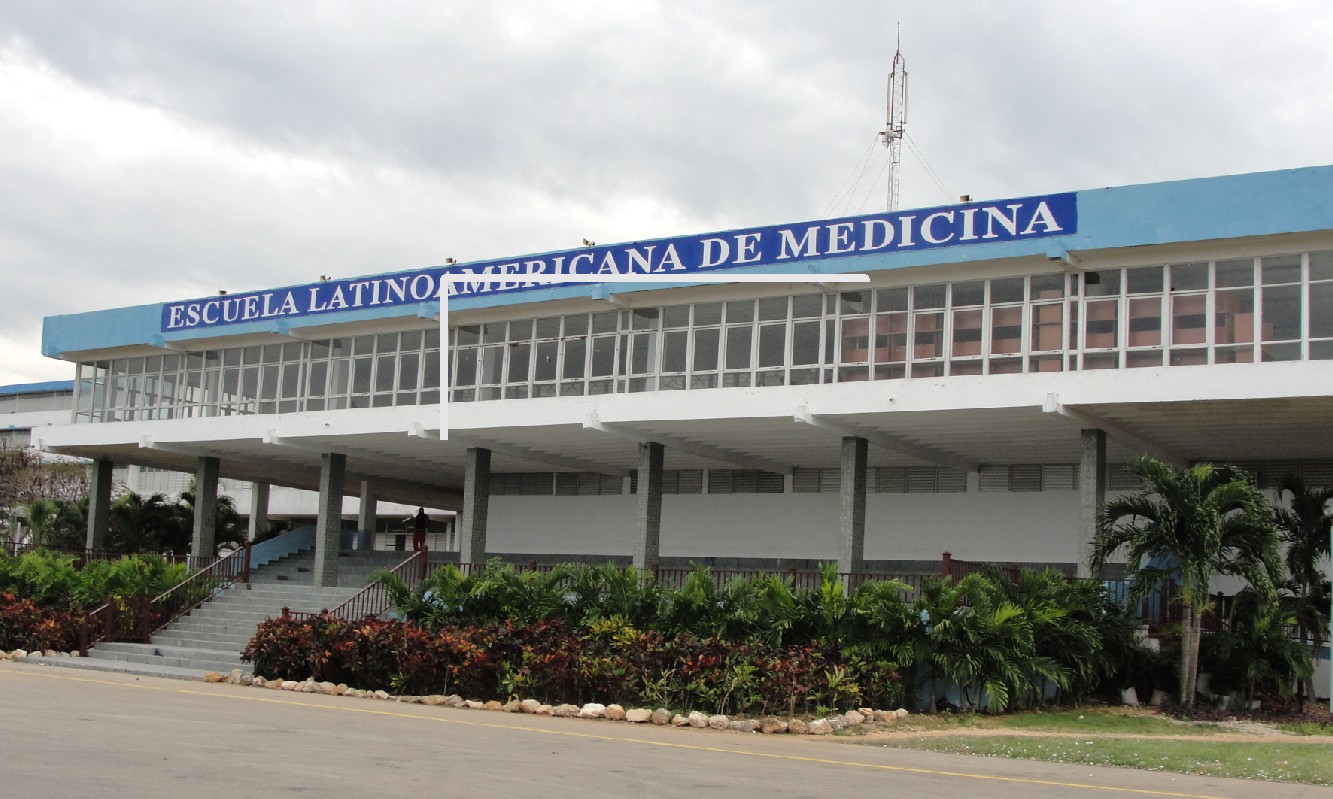
We also visited the world famous Latin American Medical School (ELAM) near Havana where foreign medical students are trained to be physicians free of charge. There are students from the U.S. studying there and we met with them. The Cubans require that the students who are accepted to the medical school make a commitment to return to their communities post graduation and serve underserved populations, i.e. poor people and minorities. Formerly, ELAM was a naval academy, but was converted to a medical school by the government.
We heard about the catastrophic earthquake which hit Haiti while we were there. Cubans had 400 doctors stationed in Haiti to provide healthcare in underserved areas. There were another 400 Cuban trained Haitian doctors providing health care services there. Cuba dispatched about 200 doctors immediately following the earthquake. That means there were about 1000 Cuban trained doctors in Haiti providing disaster health care services right after the earthquake.
Cubans also place a huge emphasis on culture and history. Former dictator Fulgencio Batista’s Presidential Palace has been transformed into a Museum. Batista’s Mansion is now a dance academy. The buildings surrounding Batista’s Mansion, which were formerly barracks, are now being used as schools.
So the Cubans are literally beating their swords into plowshares while the U.S. is waging war across the globe.
Crime is virtually non-existent and it was safe to walk the streets of Havana at all times. The people were very friendly and helpful and seemed genuinely interested in meeting Americans. I met one elderly Afro-Cuban man who had lived in the U.S. for 26 years and decided to return to Cuba to retire. We met two women from the U.S. who decided to move to Cuba and they are married to Cuban husbands.
Cubans put it very well. One Cuban woman told us, “Cuba is not Heaven and it is not Hell.â€
Currently, there is legislation before Congress aimed at lifting the travel ban to Cuba. The House version is HR 874 and the Senate version is S428. This is the time for people to contact their Congresspeople to express their opinions on this issue.
It is amazing that in the U.S., which is a country that prides itself on being “freeâ€, citizens cannot travel to a beautiful country only 90 miles from our shores.
James Thompson, Ph.D. is a psychologist in Houston
 Over the coming days, the Communist Party USA Houston club will be posting discussion documents for the upcoming CPUSA convention. However, the party’s current direction is generating discussion going into the May event. Here we present one viewpoint.
By Dean Christ, Kevin Kyle, and Joan Phillips via Political Affairs
We think the CPUSA convention, postponed several times, cannot come soon enough. We believe the Party has been heading in a wrong direction in far too many ways.
What has happened the Party’s tradition of class struggle, anti-racism, anti-monopoly, anti-imperialism, political independence, international solidarity, and indeed Marxism-Leninism?
Instead of building the Party, the current top leaders (no matter what they think or claim they are doing) have been dismantling the Party piece by piece: eliminating the print versions of the People’s Weekly World and Political Affairs, giving away the Reference Center for Marxist Studies, keeping bookstores shut, abolishing the national Organization Department and several clubs in New York, not to mention cutting YCL funding instead of prioritizing it.
The June 2009 move to end the print edition of the PWW sent shock waves through the Party. Moreover, for top leaders to sweep under the rug the many letters of protest from individuals, clubs, and districts, constituted factionalism and a violation of democracy, for which there should be accountability. With some top officers of the Party now advising against the use of the word “Leninism” as “foreign,” the word “liquidation†used by some comrades seems no longer an exaggeration.
How to Build the Party
While those of us opposed to the current direction may not wholly agree on the way forward, many would agree on the broad outlines:
- Put the class struggle at the center of our thinking and work. Organize the people’s rage at Wall Street bailouts and mass joblessness by calling for nationalization and democratic control of the banks and basic industry, and by putting the Anti-Monopoly Coalition back at the center of our revolutionary strategy to win socialism.
- Put forth an anti-crisis program centered on job creation and call attention to the special suffering of youth, immigrants, and African Americans. Work in union rank-and-file movements, building unity, militancy and class-struggle policies.
- Organize the unemployed into a political force to be reckoned with by the ruling class. We need Unemployed Councils to fight politically for jobs at living wages.
- Resume our historically second-to-none role as a leading opponent of racism, national oppression and all forms of discrimination, and as an advocate and exemplar of Black-white unity. The conditions facing African Americans, Latinos and other nationally oppressed people are disproportionately bad and getting worse. Symbolic of the top leadership’s tone-deafness on national oppression, it was an affront to Latino workers, an increasingly important group of the specially oppressed, to dismiss the Spanish-language editor of the PWW.
- Build political independence ideologically and organizationally. Support progressive Democrats when they take the side of the people, and oppose them when they take the side of corporate and military interests. Support progressive independents. Run Communist candidates where possible and appropriate.
- Oppose in principle the wars in Iraq, Afghanistan, and Pakistan as predatory, unjust wars that must end at once. Oppose U.S. imperialism in all its manifestations.
- Build mass people’s movements with renewed energy, including the anti-war movement, the movement for women’s equality and movements against racist and political repression. Rebuild Party-related left organizations, including in the labor movement.
- Revive Marxist-Leninist inner Party education to enhance members’ political development. Its neglect is evident in the party leadership’s opportunistic collapse on so many issues under the ideological pressure of monopoly capital.
- Join unequivocally the fight against the impending catastrophe of climate change and link this cause to the class struggle.
- Heighten solidarity with the Cubans, Palestinians, and other peoples besieged by imperialism.
- Work with other Communist Parties, such as the Greeks and Portuguese, who have been confronting opportunism and promoting international Communist cooperation in recent years.
Most of us recognize that the Party’s practice in the recent period, sadly, has fallen far short of these aspirations.
The blame belongs squarely with the Party’s general political and ideological line, and not, as some say, member lethargy. The political line, rendering us indistinguishable from the Democrats, makes recruitment hard, saps Party morale, and leads to chronic financial crisis.
All clear-headed Communists acknowledge that, in response to the greatest capitalist crisis in 70 years, President Obama has opened up some policy debates around health care, job creation, workers’ rights, environmental protection and nuclear disarmament. These issues were not — and are not — even on the agenda of the Republican Party.
Yet these positive openings do not cancel out the Administration’s role in the growing death and destruction in Afghanistan, the billions of dollars pouring into Wall Street banks and the corporations, the re-authorization of the blockade of socialist Cuba, or the refusal to reverse Bush’s policies of rendition and the abridgement of civil liberties.
These openings do not justify exaggerating the “possibilities†opened up by the Obama presidency or warrant fantasies about a “social movement†led by Obama.
More and more, the Party line subordinates everything to Democratic Party electoral work. It fails to grasp the centrality – the sheer gravity and scope – of this world capitalist economic crisis and the hardships the crisis is inflicting on the working class, and the corresponding need for a militant fight-back.
The line wildly exaggerates Obama’s progressive side and sows illusions about the Democratic Party as a vehicle for social change.
The Iraq War rages on. The President recently signed an all-time high $680 billion war budget – an obscenity – yet the Party voice is muffled.
The line since the last convention has weakened our ties to the international Communist movement. Too many joint statements by the world movement on the Middle East and other burning issues go unsigned by the CPUSA. Our Party’s rosy “analysis” of the Obama Administration is rejected by the rest of a world Communist movement which is mobilizing against U.S. imperialism’s current crimes.
Some top leaders push technological panaceas. Yet the over-reliance on technology is creating a party of people sitting alone in front of a computer screen. The Internet cannot substitute for direct mass contact with workers through print publications. It cannot replace struggle in the streets, shops, and communities.
Militant tactics measuring up to the desperate conditions created by this economic crisis are not pushed by the CPUSA. In practice, the current political line ignores the lessons of the 1930s and our Party’s finest legacies – the CIO, and the building of all mass movements from the grass roots.
Our Party publications have lost working-class common sense. Their pages lavish undeserved praise on the Administration, and downplay what really matters such as: an immediate end to the U.S. aggressions in the Middle East; a jobs program which is not a carbon copy of the AFL-CIO program, and which puts forth advanced demands such as a cut in the workweek with no cut in pay; equality for all nationally oppressed groups; an end to the blockade of Cuba and freedom for the Cuban Five; and health care reform worthy of the name.
The gap between reality and the current political line has rarely been greater.
We need a change. We want to restore a fighting Communist Party organization that leads struggle.
Let’s make the most of our pre-convention discussion.