Category: Analysis
Cooperatives: A Cure for Capitalism?
| January 17, 2014 | 8:36 pm | Action, Analysis, Economy | Comments closed

by Zoltan Zigedy is available at:
http://zzs-blg.blogspot.com/

Co-ops– cooperative economic enterprises– have been embraced by significant groups of people at different times and places. Their attraction precedes the heyday of industrial capitalism by offering a means to consolidate small producers and take advantage of economies of scale, shared risk, and common gain.

At the advent of the industrial era, cooperatives were one of many competing solutions offered to ameliorate the plight of the emerging proletariat. Social engineers like Robert Owen experimented with cooperative enterprises and communities.

In the era of mass socialist parties and socialist construction, cooperatives were considered as intermediate steps to make the transition from feudal agrarian production towards socialist relations of production.

Under the capitalist mode of production, co-ops have filled both employment and consumption niches deferred by large scale capitalist production. Economic activities offering insufficient profitability or growth have become targets for cooperative enterprise.

In theory, cooperatives may offer advantages to both workers and consumers. Workers are thought to benefit because the profits that are expropriated by non-workers in the capitalist mode of production are shared by the workforce in a cooperative enterprise (less the present and anticipated operating expenses and investments, of course). Many argue as well that the working conditions are necessarily improved since workplace decisions are arrived at democratically absent the lash associated with the profit-mania of alienated ownership (though little attention is paid to the consequences for productivity and competitiveness against capitalist enterprises).

Consumers are said to benefit when they collectively appropriate the retail functions normally assumed by privately owned, profit-driven outlets. Benefit comes, on this view, by purchasing from wholesale suppliers, collectively meeting the labor requirements of distribution, and enjoying the cost-savings from avoiding a product markup (little attention is paid to limitations on participation dictated by class, race, or gender; the wholesale quantity discounts enjoyed by capitalist chains are also conveniently overlooked).

A case can also be made for the cooperator’s dedication to quality, safety, and health- promotion.

In reality, cooperatives in the US are largely indistinguishable from small businesses. Like small private businesses, they employ few people and rely heavily upon “sweat equity” for capitalization. Like other small businesses, US cooperatives operate on the periphery of the US economy, apart from the huge monopoly capitalist firms in manufacturing, service, and finance.

Cooperatives as a Political Program

Since the demise of the Soviet Union and Eastern European socialism, many on the US Left have rummaged for a new approach to the inequalities and injustices that accompany capitalism. Where more than a decade of anti-Communist purges had wrung nearly all vestiges of socialist sympathy from the US psyche, the fall of the ludicrously-named “Iron Curtain” found Leftists further distancing themselves from Marxian socialism. Hastily interning the idea of socialism, they reached for other answers.

It is unclear whether this retreat was actually a search for a different anti-capitalist path or, in reality, grasping an opportunity to say farewell to socialism.

In recent years, several Leftists, “neo-Marxists”, or fallen Marxists have advocated cooperatives as an anti-capitalist program. Leading advocates include the Dollars and Sense collective centered around the University of Massachusetts, Amherst, GEO (Grassroots Economic Organizing), Professor Gar Alperovitz, Labor Notes, United Steel Workers of America, and media Marxist-du-jour, Professor Richard Wolff. Some are organizing around the idea of a “New Economy” or a “Solidarity Economy”, with cooperative enterprises as a centerpiece.

Now coops are not foreign to Marxist theory. After World War I, the Italian government sought to transfer ownership of unused land from big estates, latifondi, on to peasants, especially veterans. As much as 800,000 hectares were thus passed on to poor peasants. Through this process and land seizures, the number of smallholders increased dramatically. Socialists and Communists urged the consolidation of these holdings into collectives, agricultural cooperatives. Certainly more than 150,000 hectares ended up in cooperatives. In those circumstances, the rationale was to increase the productivity, to save the costs, to enhance the efficiency of peasant agriculture in order to compete with the large private estates. Cooperatives were not seen as an alternative to socialism, but a rational step away from near feudal production relations toward socialism, a transitional stage.

Likewise, in the early years of the Soviet Union, Communists sought to improve small-scale peasant production by organizing the countryside into collective farms, producers’ cooperatives. They saw cooperative arrangements as rationalizing production and, therefore, freeing millions from the tedium and grind of subsistence farming and integrating them into industrial production. Through mechanization and division of labor, they expected efficiency and productivity to grow dramatically, speeding development and paving the way for socialism.

Again, cooperative enterprises counted as an intermediary for moving towards socialist relations of production. Thus, Marxists see the organization of cooperatives as a historically useful bridge between rural backwardness and socialism.

But modern day proponents of cooperatives see them differently.

“The ‘evolutionary reconstructive’ approach is a form of change different not only from traditional reform, but different, too, from traditional theories of ‘revolution’” says Gar Alperovitz of cooperatives and other elements of the “Solidarity Economy” (America beyond Capitalism, Dollars and Sense, Nov/Dec, 2011). Like most proponents, Alperovitz sees cooperatives as pioneering a “third way” between liberal reformism and socialist revolution. However, a minority of advocates (Bowman and Stone, “How Coops can Change the World”, D&S, Sept/Oct, 1998, for example) see cooperatives as the “best first step towards that goal [of a planned, democratic world economy]. They suggest that the correct road is through “spreading workplace democracy” and on to socialism.

Whether postured as a “third way” or a step towards socialism, it is difficult to get a clear picture of the extent and success of the cooperative movement; it is equally challenging to gather a sense of how it is suppose to function in a capitalist economy.

As for numbers, Alperovitz (“America beyond Capitalism”, D&S, Nov/Dec, 2011) muddies the waters by citing the numbers of “community development corporations” and “non-profits” (Alperovitz, 2011) as somehow strengthening the case for cooperatives. The fact that community development corporations have wrested control of neighborhoods from old-guard community and neighborhood groups and embraced developers and gentrification causes him no distress. Of course “non-profits” count as an even more dubious expression of a solidarity economy. In a city like Pittsburgh, PA, mega-non-profits remove 40% of the assessed property from the tax rolls. These non-profits not only evade taxes, but divide enormous “surpluses” among super-salaried executives. They beggar funding from tax shelter trusts and endowment funds, completing the circle of wink-and-a-nod tax evasion. Of course there are, as well, thousands of “non-profits” that pursue noble goals and operate on a shoestring.

Alperovitz alludes to credit unions as perhaps sharing the spirit of cooperation without noting the steady evolution of these once “third way” institutions towards a capitalist business model. Insurance companies also share this evolution, but they are too far down this path of transition to capitalist enterprise to be credibly cited by Alperovitz.

Alperovitz leaves us with “…11,000 other businesses that are owned in whole or part by their employees.” In this slippery total of whole or partial worker ownership are included ESOPs– Employee Stock Ownership Programs, a touted solution to the plant closing surge that ripped through the Midwest in the 1980s. Alperovitz pressed vigorously for ESOPs in the steel industry in the 1980s as he does cooperatives today. When asked to sum up their track record, one sympathetic consultant, when pressed, said: “I don’t think its been a real good record of success. Some have actually failed…” (Mike Locker, “Democracy in Steel?”, D&S, Sept/Oct, 1998). But we get no firm number for cooperatives in the US.

Another advocacy group for cooperatives gave a more candid picture of the cooperative movement in the Sept/Oct, 1998 issue of Dollars and Sense (“ESOPS and Coops”). A study by the Southern Appalachian Cooperative Organization claimed that there were 154 worker-owned cooperatives employing 6,545 members in the US. In sixty percent of the 154, all workers were owners. Median annual sales were $500,000 and 75 percent had 50 or fewer workers. Twenty-nine percent of the coops were retail, twenty-eight percent were small manufacturing, and twenty-three per cent food related businesses.

Interestingly, the same article claims that there were approximately 11,000 ESOPs in 1988 (source: National Center of Employee Ownership). If we take Alperovitz’s 2011 claim seriously, there has been little growth in the ensuing thirteen years of “…businesses that are owned in whole or part by their employees…”.

From this profile, we can conclude that cooperatives in the US are essentially small businesses accounting for a tiny portion of the tens of millions of firms employing less than 50 employees. As such, they compete against the small service sector and niche manufacturing businesses that operate on the periphery of monopoly capitalism. Insofar as they pose a threat to capitalism, they only threaten the other small-scale and family owned businesses that struggle against the tide of price cutting, media marketing, and heavy promotion generated by monopoly chains and low-wage production. They share the lack of capital and leverage with their private sector counterparts. Cooperatives swim against the tide of monopolization and acquisition that have virtually destroyed the mom and pop store and the neighborhood business.

Some of the more clear-headed advocates acknowledge this reality. Betsy Bowman and Bob Stone concede the point: “…Marx argued in 1864 that capitalists’ political power would counteract any gains that coops might make. This has proven true! When capitalists have felt threatened by cooperatives, they have conducted economic war against coops by smear campaigns, supplier boycotts, sabotage, and, especially, denying credit to them.” (Bowman and Stone, D&S, Sept/Oct, 1998).

Mondragon

Until recently, cooperators and their advocates had one very large arrow in their quiver.

When pressed on the apparent weakness of cooperatives as an anti-capitalist strategy, they would counter loudly: “Mondragon!”.

This large-scale network of over 100 cooperative enterprises based in Spain seemed to defy the criticisms of the cooperative alternative. With 80,000 or more worker-owners, billions of Euros in assets and 14 billion Euros in revenue last year, Mondragon was the shining star of the cooperative movement, the lodestone for the advocates of the global cooperative program.

But then in October, appliance maker Fagor Electrodomesticos, one of Mondragon’s key cooperatives, closed with over a billion dollars of debt and putting 5500 people out of work. Worker-employees lost their savings invested in the firm. Mondragon’s largest cooperative, the supermarket group Eroski, also owes creditors 2.5 billion Euros. Because the network is so interlocked, these setbacks pose long term threats to the entire system. As one worker, Juan Antonio Talledo, is quoted in The Wall Street Journal (“Recession Frays Ties at Spain’s Co-ops”, December 26, 2013): “This is our Lehman moment.”

It is indeed a “Lehman moment”. And like the Lehman Bros banking meltdown in September of 2008, it makes a Lehman-like point. Large scale enterprises, even of the size of Mondragon and organized on a cooperative basis, are susceptible to the high winds of global capitalist crisis. Cooperative organization offers no immunity to the systemic problems that face all enterprises in a capitalist environment. That is why a cooperative solution cannot constitute a viable alternative to capitalism. That is why an island of worker-ownership surrounded by a violent sea of capitalism is unsustainable.

The failures at Mondragon have sent advocates to the wood shed (see www.geonewsletter.org ). Leading theoretical light, Gar Alperovitz, has written in response to the Mondragon blues: “Mondragón’s primary emphasis has been on effective and efficient competition. But what do you do when you are up against a global economic recession, on the one hand, or radical cost challenges from Chinese and other low-cost producers, on the other?”

What do you do? Shouldn’t someone have thought of that before they offered a road map towards a “third way”? Are “global economic recessions” uncommon? Is low cost production new? And blaming the Chinese is simply unprincipled scapegoating.

Alperovitz goes on: “The question of interest, however – and especially to the degree we begin to face the question of what to do about larger industry – is whether trusting in open market competition is a sufficient answer to the problem of longer-term systemic design.” Clear away the verbal foliage and Alperovitz is admitting that he never anticipated that open market competition would snag Mondragon. Did he think that Fagor sold appliances outside of the market? Did he think that Mondragon somehow got a free pass in global competition?

Of course the big losers are the workers who have lost their jobs and savings. It would be mistaken to blame the earnest organizers or idealistic cooperators who sincerely sought to make a better, more socially just workplace. They gambled on a project and lost. Of course social justice should not be a gamble.

The same sympathy cannot be shown for those continuing to tout cooperatives as an alternative to capitalism. If you want to open small businesses (organized as cooperatives), be my guest! But please don’t tell me and others that it’s somehow a path beyond capitalism.

Comrades and friends: It’s impossible to be anti-capitalist without being pro-socialist!

Zoltan Zigedy
zoltanzigedy@gmail.com

The war for poverty or poverty from war
| January 12, 2014 | 10:22 pm | Action, Analysis, Economy, National | 2 Comments

By James Thompson

On January 9, 2014 the bourgeois liberal Princeton faculty economist Paul Krugman, who completed the best US education money can buy at MIT and Yale, wrote an op-ed piece for the New York Times entitled “The War over Poverty.” http://www.nytimes.com/2014/01/10/opinion/krugman-the-war-over-poverty.html?_r=0out  In the piece, Prof. Krugman discusses the fallacious received view in this country and throughout the other capitalist controlled countries that the plight of the poor is due to some vague fault of the poor. Admirably, Prof. Krugman argues against this insane attempt to blame the poor.

He goes on to argue that low income people in the US “are much healthier and better nourished than they were in the 1960s” and ties this to the success of anti-poverty programs initiated 50 years ago. He concludes “the problem of poverty has become part of the broader problem of rising income inequality, of an economy in which all the fruits of growth seem to go to a small elite, leaving everyone else behind.”

The article elucidates the differences between liberals and conservatives on the issue of poverty. He characterizes conservatives as “callous and mean-spirited.” He sums up the conservative position as “government is always the problem, never the solution; they treat every beneficiary of a safety net program as if he or she were ‘a Cadillac driving welfare queen.’ And why not? After all, for decades their position was a political winner, because middle-class Americans saw ‘welfare’ is something that Those People got but they didn’t.”

He characterizes the liberals’ position as “Meanwhile, progressives are on offense. They have decided that inequality is a winning political issue. They see war-on-poverty programs like food stamps, Medicaid, and the earned income tax credit as success stories, initiatives that have helped Americans in need-and should be expanded. And if these programs enroll a growing number of Americans, rather than being narrowly targeted on the poor, so what?”

He draws the conclusion “So guess what: On its 50th birthday, the war on poverty no longer looks like a failure. It looks, instead, like a template for a rising, increasingly confident progressive movement.”

Although some of Prof. Krugman’s arguments are not completely without merit, he still remains a well-paid cheerleader for bourgeois liberal “safety net” programs. We must concede that such programs as Social Security, Medicare and Medicaid have benefited a great number of people across all economic classes. Even people among the wealthiest classes have benefited from “safety net” programs because they shamelessly shuffle their poorer loved ones off to these programs so they don’t have to pay for their subsistence. The same people hypocritically argue that “safety net” programs should be eliminated. Some doctors even argue that Medicaid and/or Medicare should be eliminated while they bill their patients’ Medicaid and/or Medicare.

What Prof. Krugman and his bourgeois liberal readers fail to recognize is that the US government functions to protect the interests of the capitalists with little or no regard to the interests of the people of this country. He makes a swift tangential reference to the “class war” but fails to recognize that the class war is raging in this country. Even Warren Buffett has warned us that the capitalists are winning the class war with little opposition from the people.

He also fails to recognize that interest among the people in alternative socioeconomic systems such as socialism or communism has grown remarkably recently. Since he does not recognize this reality, he cannot make the connection that income inequality leads to such tendencies.

Although the struggle between liberals and conservatives is real, Prof. Krugman does not seem to recognize that as long as the US government functions to protect the interests of the wealthy, reforms such as the “safety net” programs mentioned above will be under constant attack. And they can be eliminated by the government at any time if it is deemed to be in the interest of the capitalists.

Prof. Krugman also fails to recognize and factor in the fact that the most important interest of the capitalists is to constantly expand profits. Prof. Krugman has also failed to recognize that the necessity for capitalists to constantly expand their profits has led to an era of unending imperialist wars of occupation across the globe. Prof. Krugman fails to recognize that these wars have been conducted for the benefit of the capitalists so that they can continue to expand their profits. He also fails to recognize that the taxpayers have spent far more of their hard-earned money on the wars than the capitalists have made in expanded profits. It should be noted that throughout history capitalist governments have repeatedly spent taxpayer money to protect capitalist profits overseas and the money they spend to protect the profits exceeds the profits themselves.

In short, the Bush and Obama administrations have spent an extraordinary amount of money on killing working people in foreign countries to protect the profits of the capitalists in those countries. Unfortunately, the working man in the US foots the bill. It should be noted that the money expended is nothing compared to the loss of human life as well as permanent physical and mental injuries among the combatants and people in the foreign countries where the imperialist wars are conducted. Of course, the surviving, injured combatants return to the US and their working families must care for them using the pathetic “safety net” programs available. Prof. Krugman fails to note this point as well.

So, a combination of multiple imperialist wars being fought for the benefit of the wealthy at the expense of the poor working people as well as the wholesale exportation of jobs and industry to foreign countries in pursuit of the lowest wages possible have resulted in sustained high unemployment in the US. Meanwhile, the stock market rises and profits continue to expand because capitalists benefit when wages fall. However, there is an end to this process and it is called a crisis of overproduction commonly referred to as an economic depression.

What Prof. Krugman and other bourgeois liberal pundits fail to discuss is that the responsibility for the downward spiral of the economy rests with the capitalist system itself. As long as the system functions to benefit the capitalists, working people will continue to suffer and their suffering will expand proportionally with the expansion of profits.

Another thing that conservatives and liberals are oblivious to is that “safety net” programs tend to perpetuate inequalities between rich and poor. “Safety net” programs are carefully designed to provide a subsistence level for certain segments of the population such as elderly, disabled and to a lesser extent, unemployed pregnant mothers. They allow certain impoverished individuals to survive and such programs are funded by extracting a minimum amount of money from the public wealth created by working people. This enables the wealthy to continue extracting a maximum amount from the public wealth created by working people. In other words, if the public wealth was conceptualized as a pie, “safety net” programs would be a mere sliver. On the other hand, the piece of the pie reserved for the wealthy would be gigantic. The “safety net” programs also serve to reduce the general misery of the public just enough to prevent them from engaging in revolutionary activities. The capitalists must walk a fine line to provide just enough misery relief to prevent revolution and at the same time must limit the misery relief in order to expand their profits. This serves as the basis for the struggle between liberals and conservatives.

Herein lies the difference between bourgeois liberals and Marxist-Leninists. Social democratic bourgeois liberals fight for reforms that they justify on the basis of charity and maintain it is the right thing to do. They characterize their detractors as “callous and mean-spirited.” Marxist-Leninists agree that reforms that benefit working people and the poor are for the good. However, we recognize that such reforms are not sufficient and can easily be overturned and/or manipulated by the capitalists when socioeconomic conditions permit. Marxist-Leninists maintain that only by advancing from capitalism to socialism can humanity build a system which benefits all working people. In a socialist system, workers would achieve political dominance and would form a government that would function to protect the interests of workers.

Perhaps such ideas were not taught to Prof. Krugman and his classmates at MIT and Yale. Such ideas would probably not be received very well at Princeton either.

PHill1917@comcast.net

Michael Parenti lecture: “Globalization and Terrorism”
| November 26, 2013 | 9:29 pm | Action, Analysis | Comments closed

Here is a link to a lecture by Michael Parenti delivered at the Modesto Junior College, Modesto, California on 9/20/01 right after the tragedy which occurred on 9/11/01.

http://youtu.be/fxcgm-atVlc

Michael Parenti lecture (1986)
| October 23, 2013 | 10:11 pm | Action, Analysis, International, National | Comments closed

Michael Parenti speaks at the University of Colorado, Boulder: “US Interventionism, the 3rd world, and the USSR” on April 15, 1986. http://youtu.be/xP8CzlFhc14 Photo by James Thompson

Outstanding scholar and teacher, Michael Parenti, delivers an electrifying lecture on the world situation in 1986 during the Reagan era (some might say regime). There are surprising parallels with the situation in the world today. Listen to his prophetic words which will help you understand why we are in the state we are in currently.

Let us know what you think.
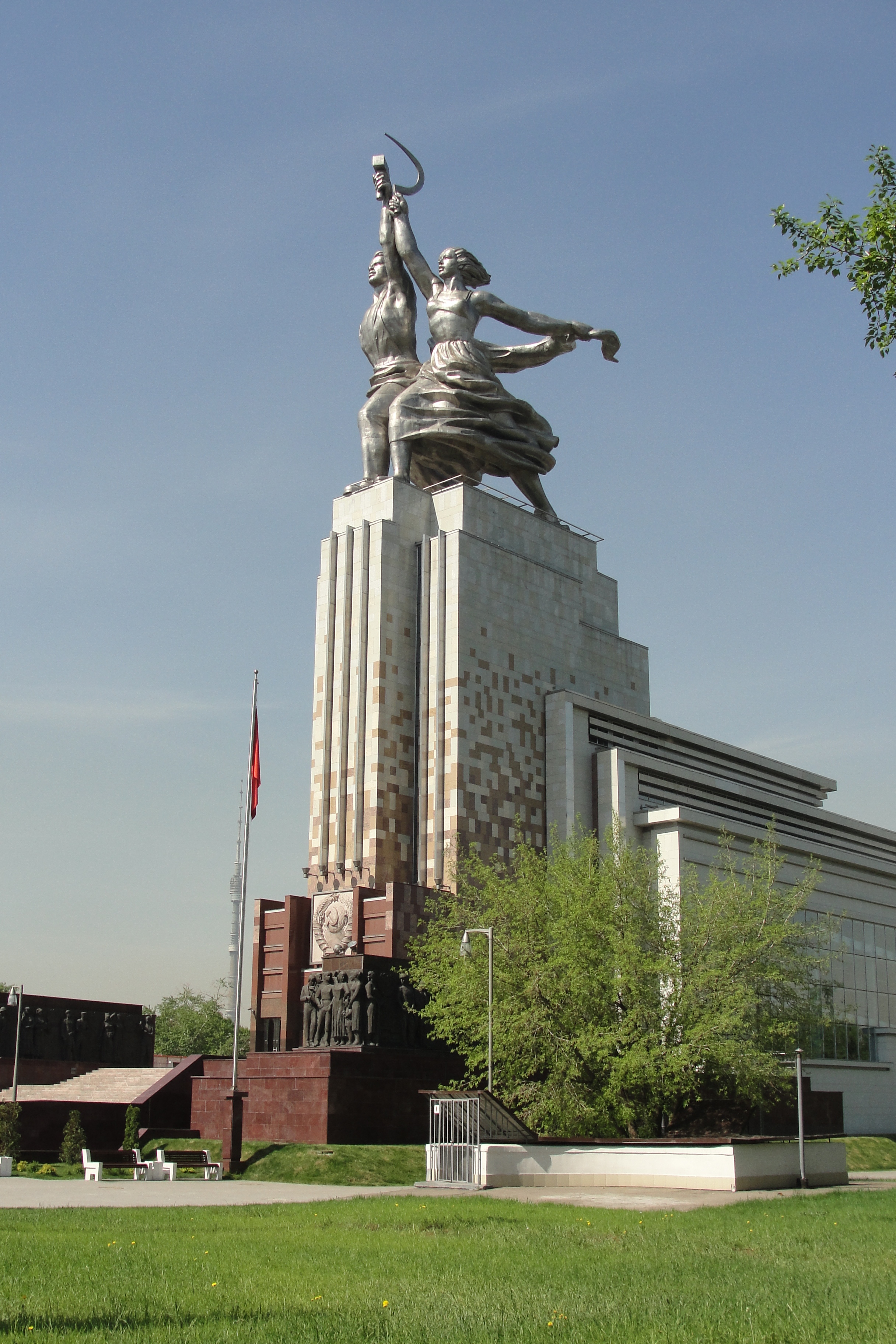
PHill1917@comcast.net Worker and Collective Farm Woman

Another view of Henry Winston’s legacy

By James Thompson

In the book “Henry Winston: Profile of a U.S. Communist” by Nikolai Mostovets (Progress Publishers, Moscow, 1983) can be found a recounting of a historic speech by Henry Winston at the 15th Convention of the CPUSA which was held in Harlem. The speech was later developed into a pamphlet entitled “What it means to be a Communist.”

Mostovets tells us:

“In his speech, Henry Winston denounced some Party leaders who were showing bureaucratic inclinations. He especially elaborated on the work Communists were to conduct in the unions. Party members were to educate the working-class politically, organize the unorganized and secure a close interrelationship between the economic and the political aspects of working-class struggle. Winston stressed that economic struggle alone led to opportunism and collaboration with the monopolies. That was important because recently some left and Communist union leaders and activists have forgotten the importance of political struggle and been caught in the quagmire of opportunism.

Winston also touched on the major aspects of the Party’s cadre policy. he emphasize the importance of establishing and maintaining close contact between the party leadership and rank-and-file union members: ‘the job of leadership is not alone to guide and direct the work of others-it is also necessary to learn… from the members and the workers. Separation from the membership, from the workers can result only in bureaucracy, and placing oneself above the Party, above the interests of the workers.

‘Secondly, it is necessary to show the utmost vigilance and noting and checking the corrupting influences of our present-day society on the thinking and living habits of some comrades, to expose these influences in the interests of the comrade himself, but primarily in the interest of the party as a whole.

‘Thirdly, it is necessary to eliminate all self complacency, cliquish and ‘family circle’ atmosphere in relationship between Communists, especially rooting out all elements of false praise and flattery. For, as one wise comrade put it, flattery corrupts not only the flattered but the flatterer as well. Fourthly, it is necessary to apply criticism and self-criticism in the molding of Party cadres. Criticism and self-criticism are not to be applied on occasions-on holidays-so to speak. They must be applied daily, as indispensable weapons in the examination of the work of our Party and the individual cadres… Only by learning the lessons from mistakes can our Party cadres develop Communist methods, habits, and qualities of leadership.

‘Finally, only those leaders can withstand the pressures of enemy ideology, can relentlessly fight against opportunism in practice, who constantly strive to master Marxism Leninism-the great liberating science of the working-class which alone gives us the confidence in the inevitable victory of the working-class, headed by its Communist vanguard. Those who see only backwardness, immobility and disunity in the working-class are bound to ignore the essential truth that it is the working-class that possesses all the necessary qualities to bring about the transformation of society and build Socialism.'” (PPS. 46-47)

At the end of the book, there are several tributes to Henry Winston:

“The Soviet people know and deeply respect Henry Winston, a staunch revolutionary and Marxist scholar, a sincere friend of the USSR and other socialist countries, and a dedicated champion of friendship between the Soviet and the American people, of peace throughout the world.

On February 4, 1977 the Learned Council of the USSR Academy of Sciences Institute of US and Canadian studies conferred a doctorate honoris causa on Henry Winston. Pravda wrote in this connection: ‘Henry Winston, a prominent figure in the international communist movement, has been awarded this degree for his outstanding contribution to the national liberation struggle theory, for his profound scholarly analysis of practical revolutionary struggle by the working people of the United States for a democratic and social transformation of society, against imperialism and racial discrimination.’

Henry Winston was in Moscow during the 26th Congress of the CPSU is a member of the CP USA delegation.

Upon his return to the United States he declared: ‘I am proud that I have witnessed a historic Congress. The Soviet Communists have advanced a program of further raising the people’s well-being and a comprehensive platform of struggle for peace, détente and disarmament. Only this road of concrete and constructive negotiations and accords to curb the arms race can save mankind from the threat of nuclear catastrophe. This isn’t glaring contradiction to the policies of the current Republican administration. The latter not only dooms millions of Americans to poverty and unemployment but also pushes the world to the brink of catastrophe accelerating war preparations and fomenting anti-Soviet hysteria. Common sense demands acceptance of the Soviet proposals. Today, we American Communists view efforts to publicize and explain the new Soviet peace initiatives to our people as one of our foremost tasks.’

On April 2, 1981 Henry Winston turned 70 years old. The Central committee of the CPSU sent him the following message to mark the occasion:

‘Dear Comrade Henry Winston,

‘The Central Committee of the Communist Party of the Soviet Union since you warm fraternal greetings and heartfelt congratulations on your 70th birthday.

‘You are well known as a prominent leader of the US Communist Party who has devoted all the long years of his sociopolitical activities to a courageous struggle for the interests of the working class and all the working people of his country, against racism and reaction, for genuine equality, democracy and social progress. Your unwavering loyalty to the ideals of Marxism Leninism and proletarian internationalism has gained you prestige with the world Communist movement. The Soviet people value highly your tireless efforts in the name of peace, disarmament, understanding and peaceful cooperation between the peoples of the United States and the Soviet Union.

‘We wish you, dear Comrade Winston, good health and success in your work for your people, peace and progress.’…

Henry Winston received messages of congratulations from other Communist parties, progressive organizations and individuals. Among them was a message from Fidel Castro:

‘On your 70th birthday, we wish to extend greetings from our Party and reiterate the admiration of our people feel for a life dedicated to the Communist cause.

‘We Cuban Communists heard in your voice the message of solidarity from the most just people in North America at the Second Congress of our Party. We wish you knew success in your indefatigable struggle for social justice and peace.’

And another message:

‘On the occasion of your 70th birthday, please accept the Portuguese Communists’most sincere wishes of good health, fruitful work and personal happiness, as well as our tribute to a lifetime wholly dedicated to the cause of liberation of the working people.
Alvaro Cunhal
General Secretary
Communist Party of Portugal’…
Gus Hall… had written in an article to mark Winston’s 60th birthday: ‘the bonds that unite us are something more than political ties. We are brothers in regard each other with particular wants, typical of soldiers fighting for a, and in just cause. In this sense we happen to represent the common destiny which unites white and black workers in a close brotherhood of class, in a union for national liberation and working-class struggle. They are involved together in a single worldwide revolutionary process which embraces all nations and all races and which is aimed at freedom and prosperity for all mankind.'” (pps. 130-132)

Two more tributes can be found on the back cover of this book:

“The life of Comrade Henry Winston is a proud page in the history of our Party. It is an illuminating page in the history of the working-class, in the history of Black Americans fighting against racial and national oppression. It is a page of leadership, of courage, of dedication. It is commitment to the full measure.”
Gus Hall
General Secretary, CPUSA

“The spirit that animates Henry Winston infuses the courageous and beautiful people who are fighting imperialism. It is the spirit of people who know deep down within themselves which side they are on, and who know, to, that their side-our side-is invincible.”
John Abt

What communists mean by private property

By Houston Communist Party

The recent upsurge in interest in socialism and communism prompted us to write this article as a clarification of how we would envision a socialist society in the U.S A recent Rasmussen poll indicated that 11% of U.S. voters believe that communism is morally superior to capitalism. This means that in spite of the campaign of misinformation that has been ongoing since the early part of the 20th century, 34 million people in this country believe that communism is morally superior to capitalism.

This paper is largely based on how the classic works of Marxism-Leninism envision a socialist society. Of course, the classic works also maintain that socialism would be developed differently in various sovereign nations according to democratic struggles and the historical context of the various societies in which socialism develops.

Let us examine what these key terms mean for working people and how they might be worked out in a developing socialist society.

Private property

Many people in the U.S. do not know the meaning of socialism and have little understanding about it, although the label “socialist” is often bandied about these days. Most people misunderstand concepts like social-ownership simply because they do not know what Marx and Lenin meant when they talked about “Private Property.”

Private property, when referred to by communists, only refers to private ownership of industry or the means of production; the things you own personally are not private property in this sense. Marx and Lenin would just call them personal belongings. Socialist economic systems seek to end private property by making the means of production collectively owned and democratically operated by the workers; the state protects the workers’ ownership of the means of production. This means real democracy in the workplace.

In a socialist system, the state would not come and take your things; that’s nonsense! The mainstream media (e.g. Fox News) would have you believe that socialists and communists will take your fingernails and toenails. Nothing could be further from the truth. Lenin wrote that if people try to accumulate and hoard publicly-owned property for their own private gain, then they will have all their personal belongings confiscated and will be sent to prison. But he never says anything about personal belongings in any other sense. The only ideology on the left in which theorists advocate the abolition of all personal belongings are the ultra-left deviations such as anarchism and Maoism. So it is very important to be precise when speaking about private property.

It is important to remember that the capitalist system leads the way in confiscation of working people’s property. The bottom 60% of households in this country owns only 4% of the nation’s wealth. The top 1% owns 37% of all the capital and the top 10% owns 90% of all capital. So, it is important to consider who is seizing what.

Rights of the capitalists

The bourgeoisie (the current ultra-wealthy, ruling class in capitalist countries that own all of the means of production, but do none of the work) will have their rights curtailed. The word “freedom” in capitalist countries has generally been used to refer to the rights of the capitalist to oppress, and exploit the workers in order to maximize profits. Socialist countries who do not extend the freedom to capitalists to exploit workers are deemed to be “not free” by the capitalists and their cheerleaders, which historically has included hypocritical politicians and other community leaders such as right wing clergy, professors and teachers. Some union leaders have also fallen into this trap. Capitalists in a socialist society would be forced to follow the will of the people and maintain dignity and respect in the workplace and would accrue severe penalties for discriminatory, oppressive and exploitative workplace practices.

In a socialist system, the workers would become the ruling class and as such would be fully compensated for their labor which is the basis of all wealth. Profits for the capitalists would be severely curtailed and eventually phased out. When capitalists and their cheerleaders smear socialists by branding them “totalitarian, and undemocratic”, we have to ask with whose democratic rights are they concerned. The answer is obvious, they are concerned about the freedom of capitalists to steal from their workers and amass great fortunes based on the labor of people other than themselves.

Universal health care, socialism vs. reformism

Socialism is not defined by reforms. For example, universal health care is not a defining feature of socialism. Universal health care is one of the many goals of a developing socialist society and it would represent an incremental improvement in any system, capitalist or socialist, since it would make health care accessible to all peoples. However, some capitalist systems have achieved universal health care, but are not socialist economies.
A socialist society would provide health care based on need, not ability to pay. Lenin argued that it is necessary that health care delivery increase in socialist systems to meet the public demand for health services. Hospitals and clinics would be built and organized based on the concrete needs of the community rather than consideration of the “profit margin.”

What does socialism do?

What is the purpose of socialism? To raise the material (i.e. concrete) standard of living of the workers, end the exploitation of one person by another, end all forms of oppression, end racism and sexism, end patriarchy and white-supremacy, end the violence of imperialist warfare, and eventually reach the goal of communism, a society without the struggle between the classes.

How do you identify a socialist country? By asking a very simple question: who owns the means of production and who controls the state? If the answer is the workers, then it is a socialist country. If it is the bourgeoisie, it is a capitalist country (no matter how liberal or “social-democratic” it is). In socialist countries, commodity production for private profit ends; production is no longer designed for the sake of the market, but rather determined by the actual needs of the people.

How does socialism happen?

Socialism must go through many stages. Unfortunately, it is difficult to specify these stages. As Marx pointed out, these stages are necessarily relative to the individual societies that develop socialism. One of the important tasks of communists is to figure out what these stages are in their societies and to educate the workers accordingly. Important questions like “what stage of socialism are we in?” should have a definite answer based on the existing material conditions and historical developments of the community in which they develop.

In the first stages of socialism, the goal is to raise the material standard of living for the working people. That means raising wages and benefits for workers. Socialist societies would provide everyone an opportunity to get an education and this will be most important for the workers. The purpose of education in a capitalist society is to train workers both for manual and intellectual labor. In capitalist countries, worker’s exposure to and preparation for appreciation of the arts and cultures of the world is very limited. A socialist education would give workers the capacity to fully enjoy and appreciate literature, art and music and would prepare them to think critically and understand scientific concepts. In a socialist system, workers would be trained to develop their own art as an expression of their own consciousness of the environment in which they live.

What would communism look like?

As the stages of socialism progress, the workers will eventually attain a comfortable standard of living and will have received a thorough education. All workers will have access both to public libraries and their own books, all of the wisdom of the ages being available to them, just because they are human beings and thus deserve all of the fruits of humanity.

Only when the final goals of socialism are met and a communist society is established will people truly be free; for in capitalist countries, most of the things that people call freedoms are really false freedoms. The freedom to buy one commodity over another is not true freedom. The freedom to choose McDonald’s over Burger King is not freedom. Neither the workers of McDonald’s nor Burger King have any say so over how these corporations are run. The community does not participate in the decisions made about how these companies produce their food. The decisions are made based on the owner’s best guess as to what product will maximize their profits.

There is no such thing as “economic freedom” in a society based on class exploitation. Only in a communist society, where the working class is no longer prevented from living the good life based on their lack of money, will there truly be freedom for all.

Who can make this happen?

Only the working class can liberate itself and claim its historic role. Only the working class can break the chains of capitalism and pave the bright path to true freedom. This can only be done by organizing and unifying the working people of this nation and the world. When working people unite and fight for their rights, it will be possible for the working class to become the ruling class. This is what we are about. This is the side that communists have fought for historically. We want a truly egalitarian and democratic society by the workers, of the workers and for the workers.

Why is the right wing so full of hate?
| November 27, 2010 | 10:57 pm | Analysis | 2 Comments

By James Thompson

It must be really confusing to be a follower of the right wing these days. Most of the Tea Party people, I imagine, would consider themselves to be Christians or Jews. Of course, this means that they were raised to believe that one should “love thy neighbor as thyself”, “do not kill”, “do not steal” and to “not covet anything that belongs to your neighbor.” Traditional Christmas greetings declare “Peace on earth, good will to all men.” The Golden Rule teaches that people should “do unto others as you would have them do unto you.” When Jesus came upon some people about to stone an adulterous woman, he declared, “He who is without sin among you, let him be the first one to cast a stone at her.”

These lessons must really stick in the craw of those people who buy into the hate against immigrants, Obama, people of color, and any others they perceive to be different or less fortunate. It should be remembered that anger and hate are merely emotional defenses against fear. That is why the right wing does everything it can to stir up fear among the populace. When you can get someone really scared, you can control them in many ways and get them to agree with many things they would not agree to if they were in a calm state. Adolf Hitler was a master at this tactic and whipped some elements of the German people into a frenzy of hysterical hatred of who they identified as non-Germans. The Nazi state then used this as a justification for invading other countries, enslaving and slaughtering working people and stealing their wealth.

The contradictions that those on the right have to swallow these days must produce some awful mental heartburn. The paid for media, as seen on Fox News and embodied by the red faced, frothing at the mouth commentators like Glenn Beck, rails against communists, socialists, democrats, progressives, our President and lumps all these people into the same group. In fact, there are so many people they hate, their spokeswoman and leader of the moment, Sarah Palin, cannot even keep who they hate straight. In a kinder, gentler statement, she referred to North Korea as a U.S. ally. Maybe this means that Ms. Palin will truly become a leader and advocate that the U.S. expand its narrowing base of allies.

Back on the home front, the contradictions are particularly sharp and Texas is a good illustration of this. Although the right wing organizations in this country are funded by some of the wealthiest individuals and corporations the world has ever seen, it must recruit its foot soldiers from the ranks of the people who listen to the bombastic hate radio programs. These people are mostly working and poor people since there are so few wealthy people. Of course, the wealthy people would not want to get their hands dirty with the vile filth that spews out of the media they own, so they hand it over to working people, much like they have done through the history of mankind. The wealthy always manipulate working people to perform those tasks they find distasteful. In Germany, the international wealthy class, including many U.S. corporations, funded the Nazi Reich, and rewarded Hitler handsomely for doing their bidding.

In Texas, the right wing was just rewarded handsomely as well. Governor Perry, handpicked by George W. Bush (the most unpopular U.S. President of all time), was just re-elected in spite of his veiled advocacy of secession. That’s right, he talked of Texas seceding from the Union, which was just a recapitulation of the old Ku Klux Klan line based on racism, hatred and fear, financed by the wealthy and bought into by some workers. Once elected, he and his right wing cronies in the legislature announced they wanted to end Medicaid in the state of Texas. Medicaid, of course, is the publicly funded insurance program that provides access to health care for poor people. Once again, we see a policy based on fear and hatred of those less fortunate. Those who hate the less fortunate can only be thought of as cowards. Of course, the contradictions here are particularly trying. The Medicaid program is so pervasive that there is hardly a family in Texas that does not have some relative who is elderly, disabled, poor and is a recipient of this publicly funded health benefit. Working people in Texas who have supported Republicans must really find it distasteful that their interests are being so openly attacked by those they have supported.

In the run-up to the passage of what the right wing refers to as “Obamacare”, red faced, frothing at the mouth Republican politicians charged that President Obama was going to throw granny out of the nursing home to die in the street. Of course, if they end Medicaid, that is precisely what would happen to many grannies. Again, we see fear used as the tool of manipulation. The few working people who have lined up to support the anti-working people positions of the right wing must be suffering from a terrible case of mental vertigo as they try to justify these harsh measures which hurt their families, friends and neighbors.

Meanwhile all this hate is extremely profitable for the ultra-wealthy. Although we are in a horrible economic crisis, profits are continuing to rise. When white workers buy into hate of black and brown workers, they make it easy for the wealthy corporations to lower the wages of all people. Low wages are the fuel that drives profits into the stratosphere. When workers say nothing while jobs are shipped to the lowest paid labor markets in the world, corporations are jubilant. However, as unemployment rises, so does the misery of working people.

Wars rage across the globe, justified by hatred and fear. These wars suck up the taxpayer’s money at a rate never before seen in the history of mankind. This money could be used on people’s needs here at home, such as education and healthcare and rebuilding the infrastructure devastated by neglect and budget cutting. Tax cuts for the wealthy and for corporations compound the problem, but the right wing uses fear and hatred to justify the unjustifiable.

It is no coincidence that Glenn Beck attacked this website for an article which was written advocating the nationalization of BP. The article called for the wealth of BP, which was produced by its workers, to be used to benefit the working people so egregiously harmed in the Gulf Coast. Shameful Texas politicians such as Joe Barton(R-Ennis), publicly apologized to BP for what he called the “shakedown.” He was referring to the Obama administration’s demand for compensation for the Gulf Coast from the corporation to help rebuild what was destroyed by its negligent and reckless safety procedures. Sadly, Barton was re-elected by working people in Texas.

As long as there are ultra-wealthy people, there will be struggle between the rich and poor. Many battles have been won by the wealthy, but the overall trend through history is for the progress of working people and the victories of the workers are many. The establishment of this nation was one of the first defeats of British imperialism. Slavery has been ended as well as indentured servitude. Nazism and Japanese imperialism were smashed. Women have the right to vote. There is freedom of religion in many parts of the world. Although we have suffered recent setbacks in education and healthcare in this country, many countries in the world today have universal healthcare and education and it will not be long before we have these services here. Racism and hatred are still around, but they are much less potent forces than they were in the past.

The progress of working people has always been resisted by the wealthy with everything they can throw at us. Goons, stool pigeons, red baiting, slander, rigged elections, propaganda, misinformation, lies, threats, thugs, racism, police, military and even nuclear weapons have been used by the wealthy to terrify working people and break down their will to unite and fight for their rights. However, the fight continues. We workers need to keep this in mind and remember “…I tell you the truth, it is hard for a rich man to enter the kingdom of heaven. Again I tell you, it is easier for a camel to go through the eye of a needle than for a rich man to enter the kingdom of God” and “So the last will be first and the first will be last.” However, these are hollow words if workers ignore the words of Frederick Douglass when he said “If there is no struggle there is no progress. Those who profess to favor freedom and yet deprecate agitation are men who want crops without plowing up the ground; they want rain without thunder and lightning. They want the ocean without the awful roar of its many waters.” It is up to us workers to struggle for our rights and a better world in spite of the awful roar of the right wing haters.

PHill1917@comcast.net